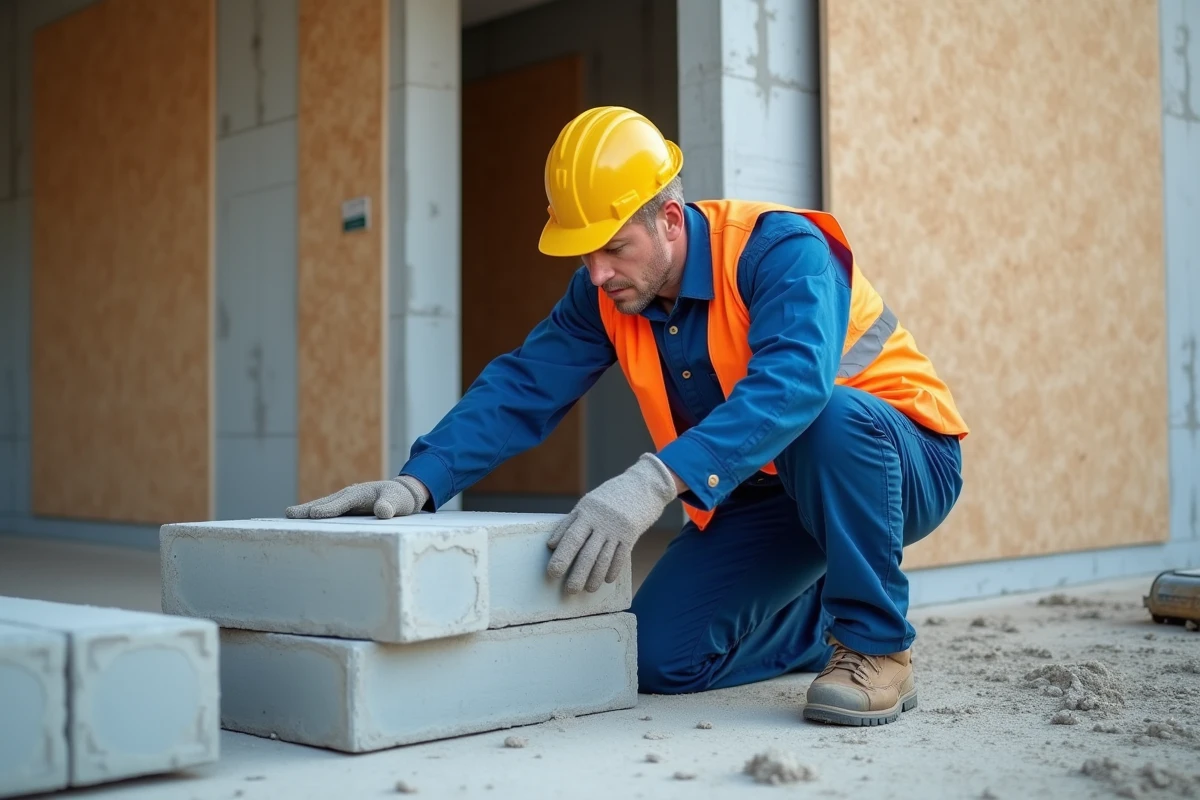
The term “concrete block” often mistakenly refers to an entire category of materials, while it actually encompasses distinct products, including agglomerate and concrete block. In some estimates, confusion persists, leading to inappropriate technical choices and unexpected price discrepancies.
Thermal regulations sometimes impose specific performances that immediately eliminate certain common solutions. Recent construction sites have shown that the choice between agglomerate and concrete block is based on criteria much more varied than just strength or ease of installation.
Concrete block, agglomerate, rubble, concrete block: what are the differences for your projects?
When it comes to construction, habits and terminology vary significantly from one region to another. Some swear by concrete block, while others only refer to agglomerate, or even concrete block or rubble, but this little world does not always refer to the same thing. The concrete block, also known as agglomerated block or concrete block, is made from a mixture of aggregates, cement, sand, and gravel, molded and then dried. It serves as a reference for the load-bearing walls of recent constructions, once the Nf standard is respected.
This semantic ambiguity is well summarized here: the difference between agglomerate and concrete block is more a matter of local tradition than a technical reality. In Provence or Auvergne, the term “agglomerate” prevails to refer to the hollow concrete block; in Calais or Languedoc, the word “concrete block” dominates. Elsewhere, the term “rubble” refers to natural or reconstituted stone, prized in renovation or for old walls.
Clarifying these terms requires going beyond mere aesthetic rendering. The mechanical resistance, adaptation to the climate (in the Alps or Rhône-Alpes, for example), and insulation requirements make all the difference on the ground. Some prefer rubble blocks for their authentic character, while others favor concrete blocks for their quick installation and robustness. Craftsmen always adjust their choices based on usage: load-bearing wall, partition, or specific insulation needs.
Advantages and limitations of each material: what you need to know before choosing
The match between concrete block and agglomerate begins as soon as the project is conceived. Both derived from industrial and standardized manufacturing, concrete blocks and agglomerates share a hollow structure based on cement, sand, and gravel. They can be found all over France whenever it comes to building solid walls, in Drôme as well as in Hauts-de-France.
From a technical standpoint, there is no winner: the distinction is merely a matter of regional vocabulary. What weighs in the balance are the ease of installation, the speed at which the wall goes up, the suitability to soil characteristics, and adherence to Nf rules. On certain construction sites, insulating concrete blocks are preferred to combine strength and thermal performance, sometimes adding an insulating layer.
Before making a choice, it is valuable to keep in mind some common weaknesses encountered in constructions:
- The thermal inertia of concrete blocks or agglomerates remains average. It is therefore better to plan for additional insulation to meet the latest standards.
- In terms of sound insulation, these blocks lag far behind solid bricks or cellular concrete.
- Performance varies depending on the quality of the aggregates used and the precision of the implementation.
Finding the right solution requires balancing several parameters: wall usage (load-bearing or partition), geographical location, climatic constraints, insulation needs, and overall budget. Even though standard concrete blocks are the most common choice, the winning material will always be the one that aligns with the construction site and not just with current trends.

How to select the right material for your construction project? Our practical tips
The decision between agglomerate and concrete block is not made at a glance. Start by asking yourself a question: what function will your wall need to fulfill? For load-bearing, mechanical resistance is paramount. In harsh winter zones, such as Rhône-Alpes or Auvergne, certified blocks ensure strength and peace of mind.
The choice of product also depends on the construction site. Some concrete blocks are designed for rapid installation, while others emphasize thermal inertia or additional insulation. For a partition, lighter blocks work wonders; for a facade, integrate the RE2020 regulations and prioritize solutions that consume little gray energy, adding sufficient insulation as needed.
Here are the essential criteria to monitor during selection:
- Check the soil quality: some terrains require specific blocks, especially in the presence of clay or movement.
- Consult the Nf standard to ensure compliance and durability of materials.
- Evaluate the price by anticipating all costs, including purchase, transport, installation, and finishing.
- In areas exposed to moisture or frost (Rhône-Alpes, Languedoc), adjust your choice accordingly.
Specialists often recommend the combination of concrete blocks and high-performance insulation to meet current requirements. The priority remains the same: adapt the material, aim for strength, optimal insulation, and manage the entire budget. This is where the durability of the construction makes the most sense, far from fleeting trends. Once the construction is complete, only robustness and comfort matter, for a long time, brick by brick, choice by choice.