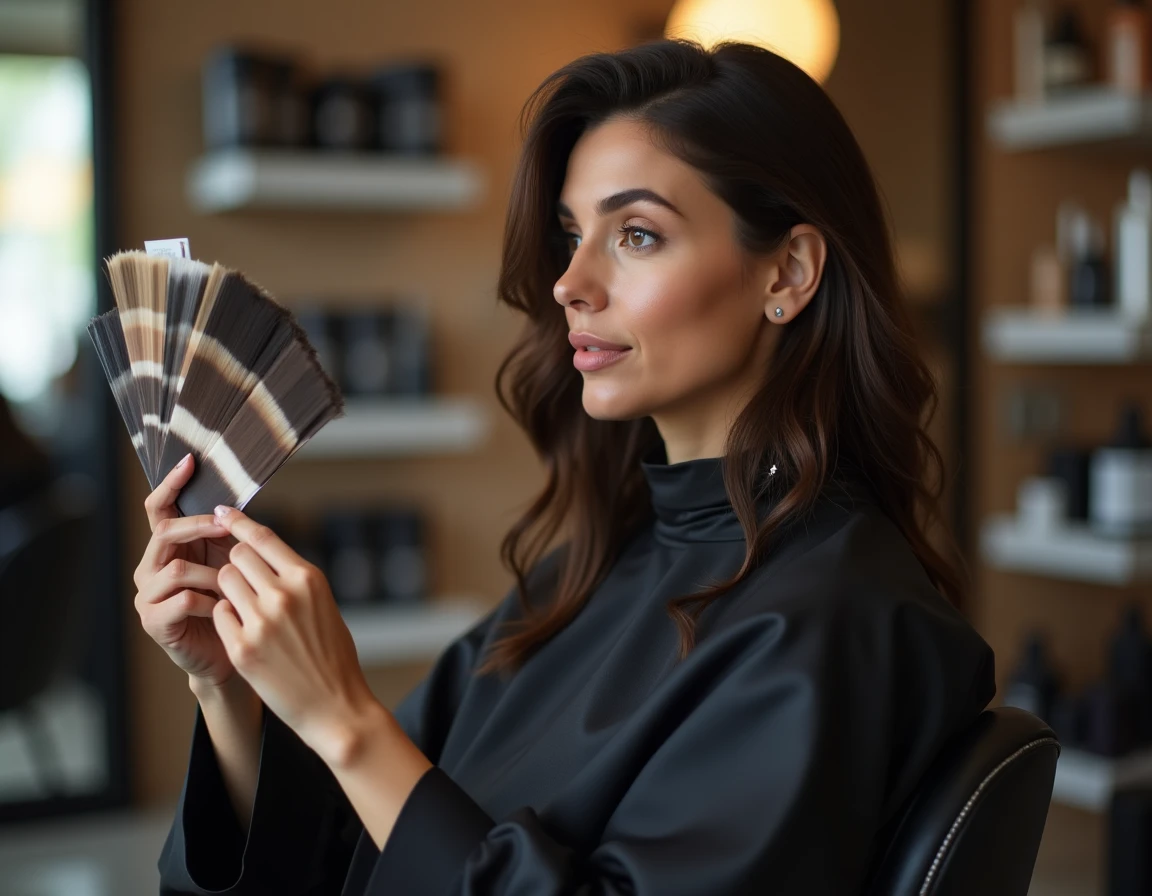
Choosing a hair color that suits your complexion relies on a criterion that is often overlooked: the undertone of the skin. The visible shade (light, medium, or dark) is not enough to guide the choice of a hair color. It is the undertone, cool, warm, or neutral, that determines whether an ash blonde, a golden brown, or a copper red will truly enhance the face.
Skin undertone and hair color: the criterion that complexion alone does not reveal
Most guides suggest choosing your hair color based on the overall complexion. This approach oversimplifies the issue. Two people with fair skin can have radically different undertones: one leans towards pink (cool undertone), while the other leans towards gold (warm undertone).
L’Oréal Paris emphasizes this distinction: it is the undertone that directs you towards an ash blonde, golden, platinum, or caramel shade. Observing the color of the veins on the wrist remains the most accessible method. Bluish or purplish veins indicate a cool undertone. Greenish veins point to a warm undertone. A mix of the two indicates a neutral undertone.
Knowing how to choose your hair color starts with this identification step, even before flipping through a color chart or looking at inspiration photos on social media.
| Skin Undertone | Visual Indicators | Suitable Color Shades | Shades to Avoid |
|---|---|---|---|
| Cool (pink, bluish) | Blue-purple veins, frequent redness | Ash blonde, platinum blonde, cool brown, blue-black | Copper red, intense golden blonde |
| Warm (golden, peach) | Greenish veins, sun-kissed golden complexion | Honey blonde, caramel brown, red, warm chocolate brown | Ash blonde, blue-black |
| Neutral (mixed) | Blue-green veins, olive tan | Hazelnut brown, sandy blonde, medium browns | Few strict contraindications |
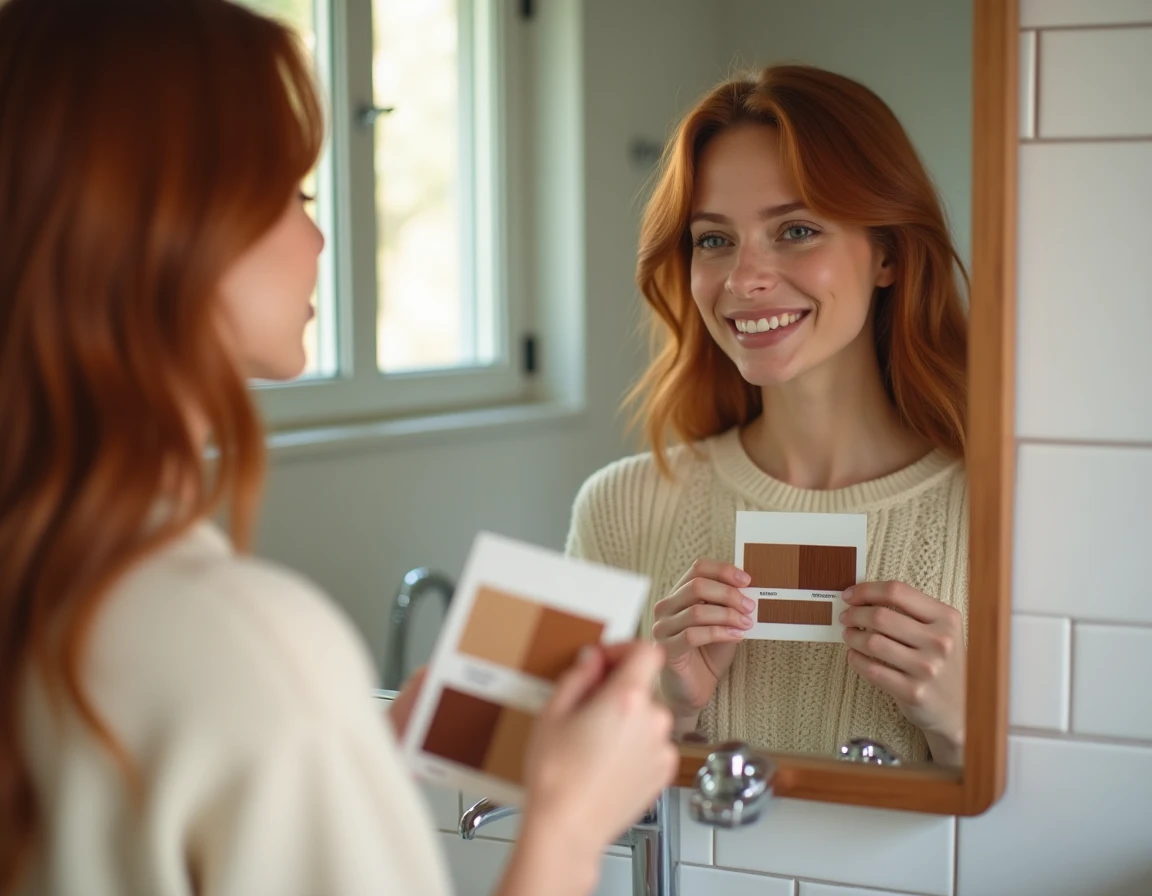
Contrast between eyebrows and hair: a balance that changes the result
L’Oréal Paris highlights a point that classic color charts ignore: a color too far from the eyebrows disrupts the balance of the face. The current trend favors a limited gap between the hair color and the eyebrow color to maintain a natural look.
Specifically, transitioning from dark brown to very light blonde without adjusting the eyebrow shade creates a noticeable discrepancy. Conversely, a slight contrast (one to two shades difference) adds depth to the gaze without an artificial effect.
How to assess this gap before coloring
The most reliable method remains to place a strand of the desired color next to the face, near the eyebrows. In salons, colorists use physical samples. At home, some simulation apps provide a first indication, but they do not accurately reproduce the reflections under natural light.
For those whose eyebrows are naturally very light or gray, slightly tinting the eyebrows after coloring helps restore harmony. This detail, rarely mentioned in coloring guides, makes a significant difference in the final result.
Coloring and hair health: choosing the shade based on possible maintenance
The choice of a color is not limited to aesthetics. L’Oréal Paris reminds us that a color lighter than the natural shade can weaken the hair fiber, especially if the lightening exceeds several tones. Before deciding, it is better to anticipate the maintenance that the shade will require.
- Light lightening (one to two tones): minimal aggression, a weekly moisturizing treatment is usually sufficient to maintain shine
- Significant lightening (three tones or more): nourishing masks and regular repair treatments become necessary to limit breakage and dryness
- Tone-on-tone or darker coloring: the fiber is less damaged, but the reflections may fade with shampoos if the appropriate care is not used
Choosing a shade close to your natural color reduces the frequency of root touch-ups. For a medium brown person, a caramel brown or hazelnut brown limits visible regrowth lines, whereas a platinum blonde will require a salon visit every four to six weeks.

Preparation before coloring: what has really changed
The classic advice of not washing your hair for 24 to 48 hours before coloring remains widespread. L’Oréal Paris nuances this rule: the accumulation of styling products matters more than the time since the last shampoo. Hair coated with hairspray, serum, or texturizing spray prevents the color from penetrating evenly.
A light rinse without conditioner the night before application is sufficient in most cases. The goal is to have clean hair but not stripped, with just enough natural sebum to protect the scalp during the chemical process.
Products to avoid in the days leading up to coloring
- Hair oils and silicone-based serums, which create a waterproof film on the fiber
- Too aggressive clarifying shampoos, which dry out the scalp and make it more sensitive
- Heavy protein masks (concentrated keratin), which can alter the porosity of the hair and affect color uptake
Following this simple preparation improves the uniformity of the result and reduces the risk of scalp irritation during application.
The choice of a hair color benefits from being approached as an equation with multiple variables: skin undertone, contrast with eyebrows, realistic maintenance level, and hair preparation. Focusing solely on the visible complexion without considering these parameters often leads to disappointments, even with a shade that is theoretically flattering on the color chart.