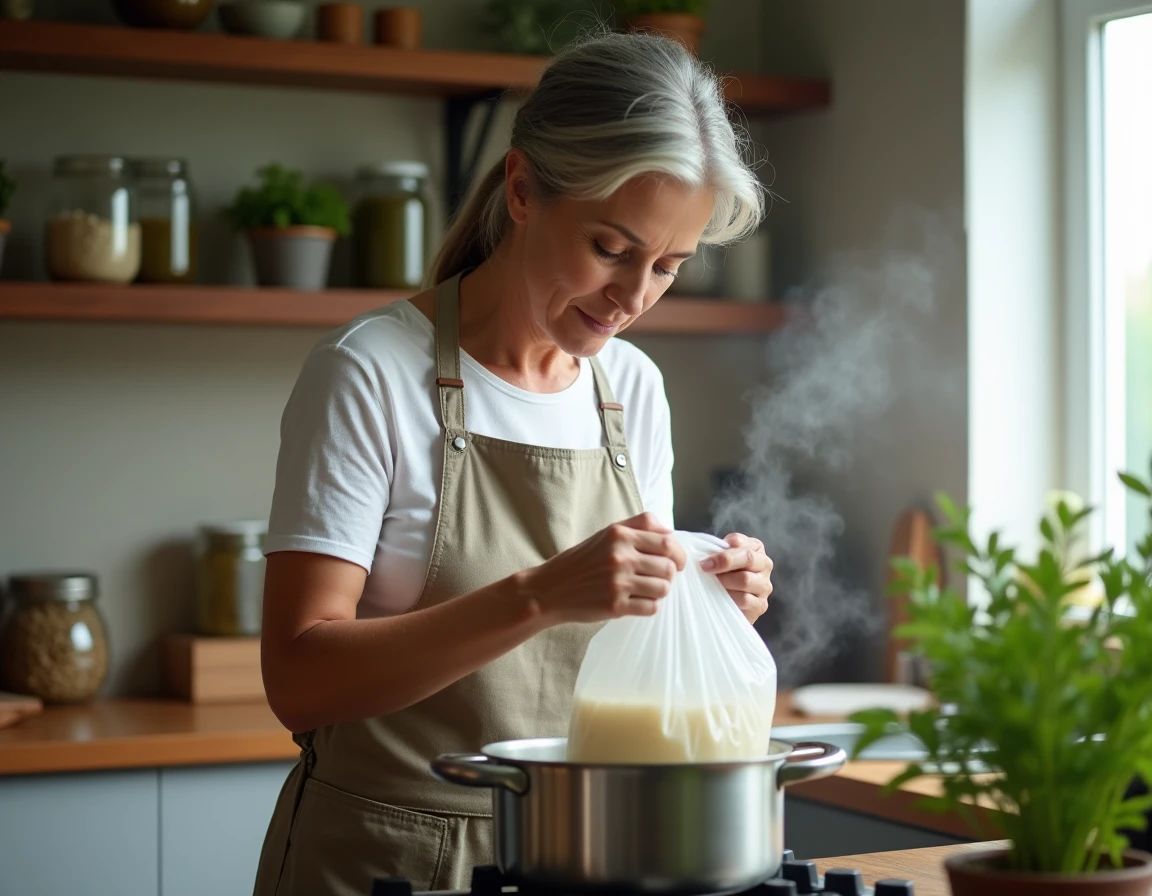
Reheating a vacuum-sealed dish is not just a matter of throwing it into a pot of boiling water. The reheating of a vacuum-packaged product follows specific thermal constraints, and a poor approach can degrade both texture and food safety. Here, we detail the technical points that make the difference between properly reheated dishes and those that are overcooked or poorly tempered.
Thermal transfer in vacuum bags: why the method matters
A vacuum bag acts as a watertight barrier that prevents any exchange of moisture with the outside environment. This confinement has an advantage (no drying out) and a disadvantage: heat only penetrates by conduction through the film. There is no internal convection to accelerate the homogenization of temperature.
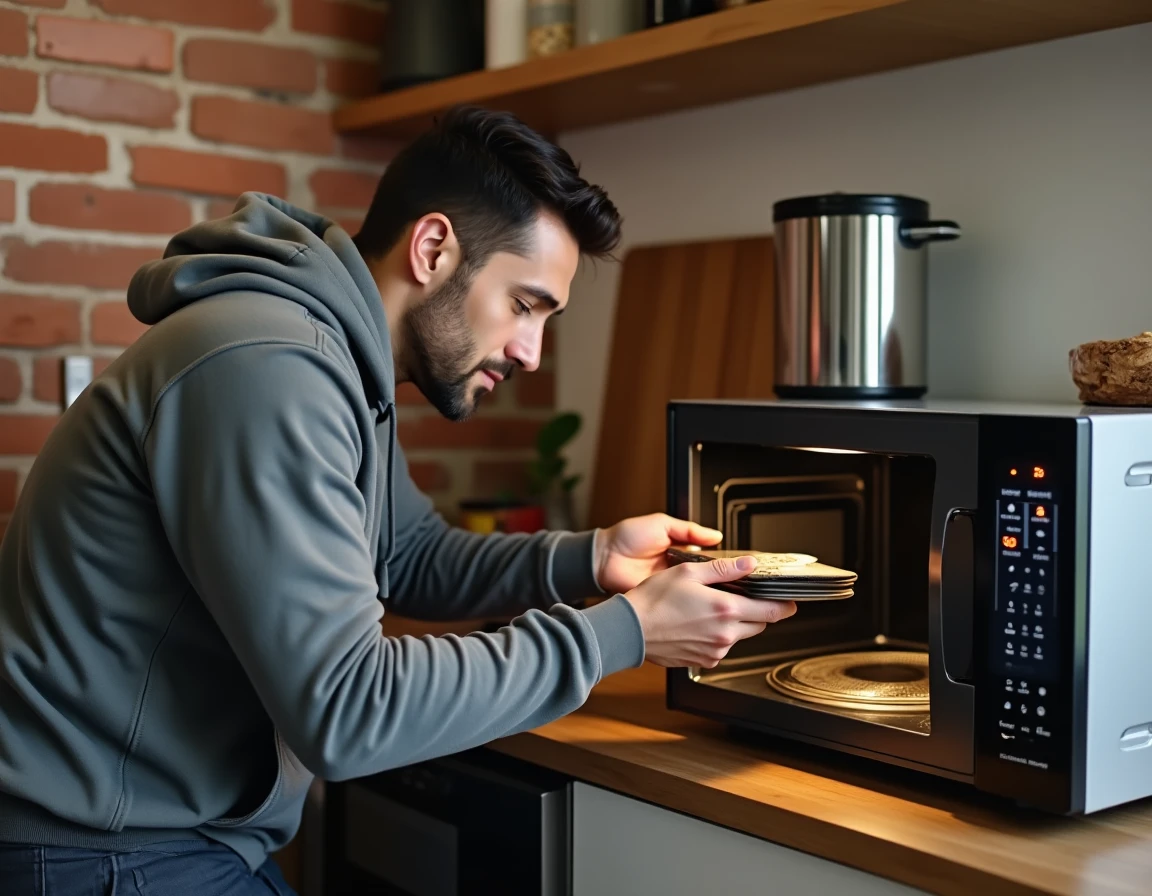
This particularity explains why microwaves can be problematic. Microwaves excite water molecules unevenly, creating localized hot spots while other areas remain lukewarm. In a sealed bag, the steam generated by these hot spots has nowhere to escape. The result: a risk of the bag bursting, seams failing, and the food being reheated very unevenly.
A controlled hot water bath remains the reference method because it envelops the bag in a uniform temperature. The heat rise is gradual, without thermal shock, and the temperature of the medium never exceeds that of the water. We recommend considering the microwave only as a last resort, after transferring the contents to an appropriate container.
For those who want to delve deeper into the reheating protocols for vacuum bags, you can learn more on 3 Coups 2 Fourchette, which details several scenarios based on the type of preparation.
Reheating in a water bath: temperature and duration according to the type of dish
The type of preparation entirely dictates the reheating strategy. Treating duck confit like a vegetable julienne guarantees a mediocre result in both cases.
Sauced dishes and confit meats
Preparations rich in fat and liquid (stews, braised dishes, confits) withstand prolonged reheating at low heat well. The water in the bath should remain below the simmering point. Water that is too hot causes peripheral overcooking before the center of the bag reaches the proper temperature.
For a bag taken out of the refrigerator, allow enough bath time for the center of the product to reach serving temperature. A bag taken out of the freezer requires significantly more time. We observe that many amateur cooks underestimate this duration and serve dishes that are still cold in the center.
Vegetables and delicate preparations
Vegetables cooked sous vide lose their firmness quickly at high temperatures. A bath that is too hot turns al dente green beans into mush. The temperature window is narrower, and the reheating duration must be reduced compared to sauced dishes.
Breaded or crispy preparations have no interest in being reheated in their bag. The crispiness disappears entirely. It is better to open the bag and place the item in the oven or skillet for a few minutes to restore the surface texture.
Cooling before freezing: the step most guides overlook
The quality of reheating is largely determined before placing it in the freezer. A dish vacuum-sealed while still warm will produce condensation inside the bag. This free water, once frozen, forms ice crystals that damage the cellular structure of the food.
Rapid cooling in a blast chiller or ice water bath before vacuum sealing significantly limits this phenomenon. The goal is to go from cooking temperature to refrigeration temperature as quickly as possible before proceeding with packaging and freezing.
This protocol has a direct impact on reheating: a well-cooled then frozen product releases less water upon reheating, preserving flavor concentration and texture integrity.
Vacuum bags and reheating: material compatibility
Not all vacuum bags are designed to withstand heat. Entry-level bags intended for refrigerator storage may deform, release undesirable compounds, or have their seals fail when in contact with hot water.
- Polyamide/polyethylene (PA/PE) bags: the most common for sous vide cooking, they withstand temperatures compatible with reheating in a water bath without degrading.
- Simple polyethylene bags: suitable for cold storage, they are not designed for hot water immersion and may deform or lose their seal.
- Bags labeled “microwave-safe”: some manufacturers offer bags with an integrated degassing valve, but their compatibility varies by brand. Always check the manufacturer’s label before use.
In case of doubt about the nature of the bag, the most reliable solution remains to transfer the contents to a glass or ceramic dish before reheating. It’s less convenient, but it’s the only option that eliminates any material-related risks.
Freezing and reheating sous vide: sealing a dish with liquid
Vacuum sealing a preparation containing liquid (sauce, juice, broth) poses a mechanical problem: the air suction pulls the liquid towards the sealing area, preventing a clean seal.
- Freeze the dish flat in the open bag, then vacuum seal once the contents are solidified. This method yields the best results in terms of airtightness.
- Use the “liquid” or “pulse” function of sealers that allow for manual control of the suction, stopping before the liquid reaches the sealing bar.
- Place the bag vertically in a deep container and use the water displacement method (progressive immersion) to expel the air without mechanical suction, then close with a clip or quick seal.
A poorly sealed bag compromises the entire chain: loss of airtightness during freezing, freezer burn, and then uneven reheating due to residual air pockets. The care taken in sealing determines the final quality of the reheated dish as much as the reheating method itself.
Reheating sous vide at home should be treated as a technical gesture in its own right, not just a simple pass over heat. A good bag, controlled cooling, and a stable temperature water bath are enough to bring a dish close to its freshly cooked version.