
The origins of Margot Haddad do not align with the expected narratives of the media elite: here, the family lineage is written through discreet paths, unexpected transmissions, and a blend of influences that do not fit into any predefined box.
The family roots of Margot Haddad: between cultural diversity and unique heritage
In the Haddad family, it is impossible to stick a fixed label: the trajectory of the name bears the mark of several worlds that intersect. Margot Haddad grows up in France, but her roots draw from the memory of the Near East as well as the Maghreb. This weaving, far from stifling individuality, shapes a multiple identity, made of stories of breaks, successive anchors, and family dialogues passed down through time.
Her surname travels willingly from Casablanca to Beirut. Through generations and migrations, a common motif recurs: that of families who, in intimacy, do not forget what the passage from one continent to another entails, nor how each move shapes new reference points. Born in France, Margot Haddad defines herself through a family-adventure where memories of exiles or returns collide, where each arrival contributes to an identity construction that is never fixed.
The subject fascinates, as evidenced by the numerous studies on the origins and religion of Margot Haddad. It is indeed difficult to remain indifferent to this profile marked by cultural diversity and discreet transmission, in a society that continually questions its own boundaries. Through her, the richness of family heritage asserts itself, with its adjustments, loyalties, and adaptations.
To understand the journey of Margot Haddad, one must listen to what the twisted family trees, the stories of ancestors, and the personal choices tell, which, generation after generation, nourish a reinvented sense of belonging.
What role do religion and traditions play in her family’s history?
In the Haddad family, religion and traditions are lived away from the curious gaze: they prefer to display an assumed discretion regarding private life and deep convictions. However, it would be reductive to oppose cultural identity and inherited practices: everything plays out in this in-between, where each family branch chooses to accommodate customs and values from the Near East or the Maghreb in its own way.
Some markers can be identified, passed down through generations:
- Traditions and religion mainly influence the family sphere, but do not seek a place in the public arena.
- Stories passed down, celebrations shared away from the spotlight: all these moments cement a sense of belonging without ever turning into a claim.
- In lineage, the bond stretches between ancient Jewish communities of the Maghreb and fragments of the Arab diaspora from Lebanon, Jordan, or Syria.
- The approach remains always flexible: each family path adapts the rites, revisits the meaning of transmission, builds its own balances.
The Haddads display no exclusive belonging, no clear boundaries. This lived plurality irrigates everyday choices: here, cultural diversity forms a common ground, on which religion remains primarily a heritage, not a label to be brandished. The emphasis is placed more on respect, welcome, and solidarity, values that endure quietly but structurally shape the family project. A model of discreet integration, where fidelity to roots is combined with an adaptability characteristic of many children of migration.
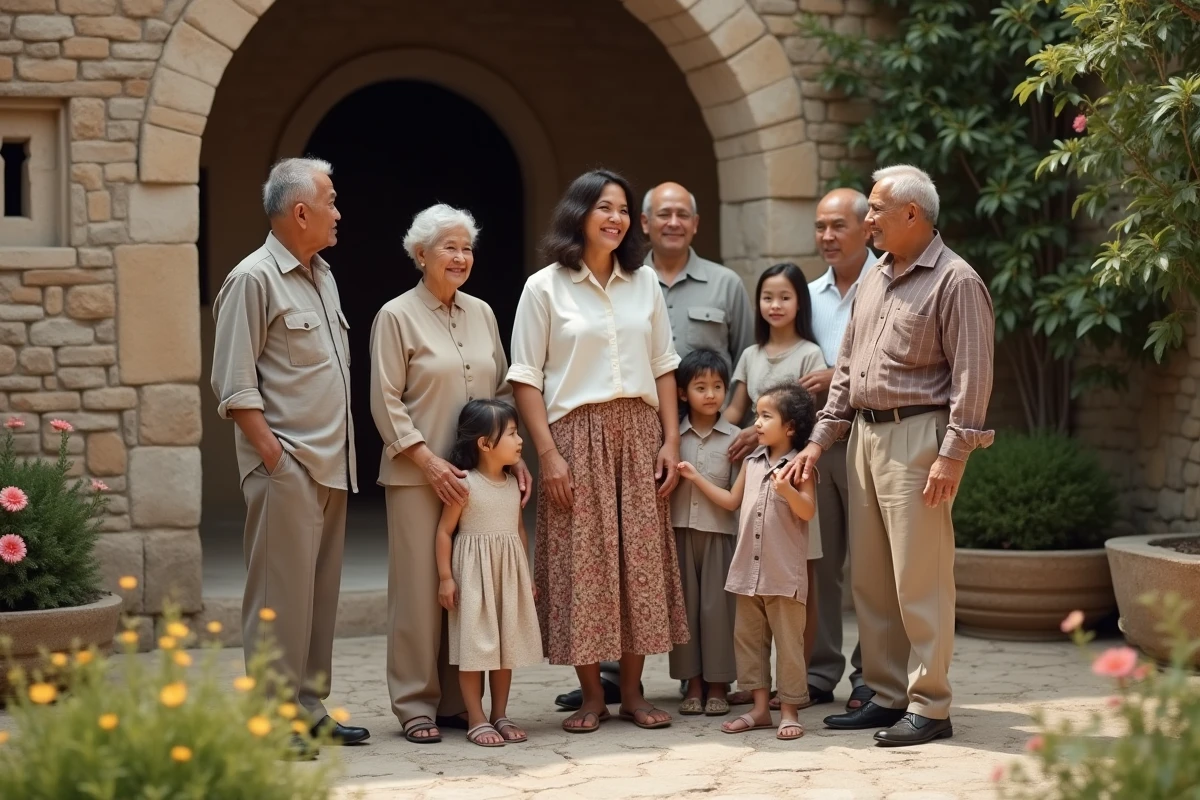
When family heritage influences the path of Margot Haddad
Margot Haddad’s personal experience is enriched, step by step, by this colorful heritage. She carries the memory of the Near East and the Maghreb, but refuses to make it a mere burden. This foundation, she has transformed into a desire for elsewhere, a wish to cross social, cultural, and intellectual borders.
The journey is eloquent: training at Sciences Po, at the Sorbonne, then a leap to Columbia University and Harvard Business School. Navigating between Paris and New York becomes a way to fully embrace this initial mix. Having passed through Gobelins Paris, Margot Haddad hones her taste for visual storytelling; social media pushes her to relentlessly question the representation of diversity in information.
What sets her apart is a firm will to act outside expected frameworks. Margot Haddad strives to explore the margins, to advocate for equality in all its forms, to place social justice at the heart of journalism. Her commitment is rooted in a history where migration, resilience, and the porosity of family borders nourish a particular sensitivity to those who are often forgotten. Each professional endeavor then extends, in the field, an intimate questioning: how to make plurality heard? how to amplify the voice of those we keep at a distance?
Ultimately, family heritage weaves its way into every stance, every article, every idea defended. It quietly draws a line of demand. It is the promise of a different place to explore, the tenacious memory of migratory paths, the persistence of a question that always awaits its next answer.