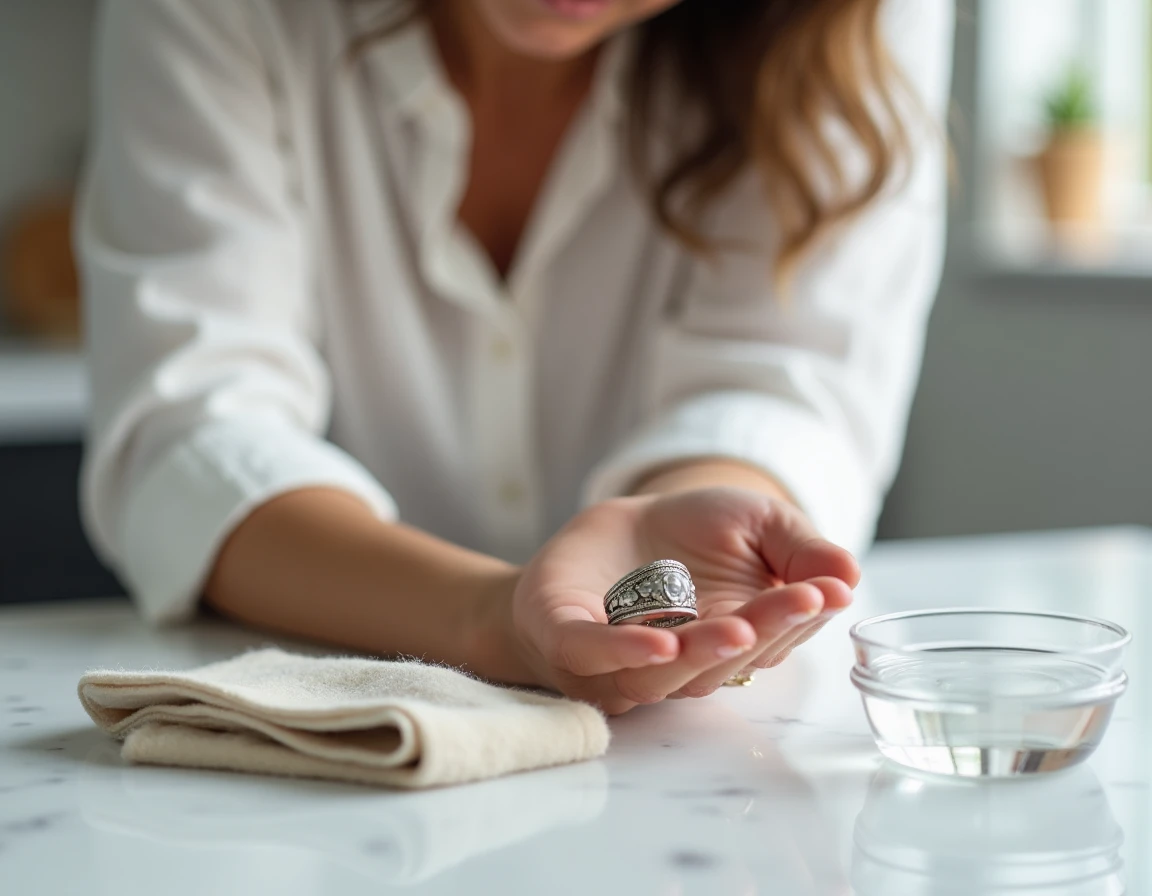
You have been wearing an engraved ring for months and, upon removing it, you discover a groove marked on your finger. This circular mark, sometimes accompanied by discoloration or a slight thickness of skin, does not disappear within a few hours. Eliminating the traces left by an engraved ring requires understanding what is actually happening under the band, and then addressing the right cause.
Engraved ring marks on the skin: why friction matters more than the metal
Most people think that the mark comes from the metal or the engraving that “stains” the skin. In reality, the mark corresponds to chronic pressure exerted on the epidermis. The weight of the ring, combined with the relief of the inner engraving, creates repeated friction that compresses the tissues.
This phenomenon resembles the beginning of a callus. The skin thickens slightly, whitens, or sinks depending on the depth of the engraving and the duration of wear. Rubbing or scraping the skin does not solve the problem, since the cause is mechanical and not chemical.
The case of rings made from very hard metals (tungsten, titanium, steel) exacerbates the situation. The internal engravings on these materials often have sharper edges than those on gold or silver. These edges create micro-irritations that leave persistent red or brownish lines. If you are looking for solutions for ring marks, the first reflex is to check the inner profile of your ring before treating the skin.
Interior polishing and comfort fit profile: treat the ring, not just the skin
You may have noticed that some rings leave a clear mark while others, worn just as long, leave nothing at all? The difference often lies in the inner profile of the ring.
Flat edge or rounded edge: two results on the skin
A ring with a flat profile presses on a narrow band of skin. The pressure concentrates on the edges, which deepens the groove. A so-called “comfort fit” profile rounds the inside of the ring. The pressure is distributed over a wider surface, and the internal engraving, if it exists, is softened.
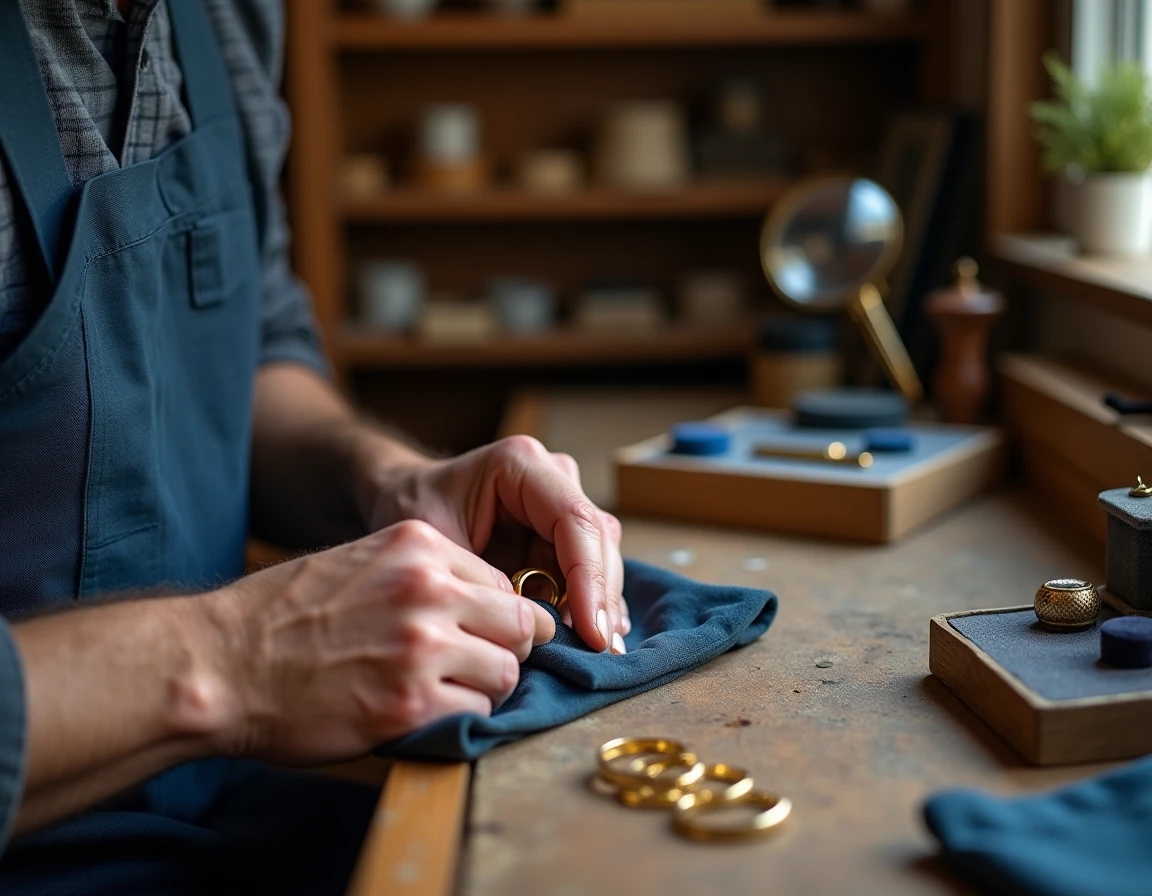
A slight interior polishing by a jeweler is often enough to reduce the relief of the engraving that irritates the skin. This operation does not remove the inscription; it smooths the sharp edges. On hard metals like tungsten, this intervention is more delicate, but a well-equipped professional can carry it out.
When ring size works against you
A ring that is too tight compresses the finger constantly. Blood circulation is impaired, the skin swells around the ring, and the mark deepens. Switching to a half size up reduces pressure and the mark. Alternating fingers for wearing, when the jewelry allows, also gives the skin tissue a break.
Removing the mark on the skin: effective actions
Once the ring is adjusted or removed, it is important to give the skin time to reshape. A few actions can speed up the process.
- Remove the ring every night before sleeping. The skin recovers overnight when blood circulation is not hindered by the ring.
- Massage the area with a rich moisturizer, using circular motions. Hydration softens the thickened epidermis and helps the groove fill in.
- Apply an aloe vera-based treatment on the red or brownish micro-irritations. Aloe vera soothes inflammation without aggravating the weakened skin.
- Avoid rubbing the mark with an abrasive scrub. The marked skin is already under strain, and an aggressive scrub risks causing additional irritation.
The mark from a ring worn for several years can take a few weeks to disappear completely. The skin tissue renews gradually, not in a day.
Cleaning the engraved ring without damaging the inscription
The engraving accumulates residues of soap, cream, and sweat that can transfer a grayish layer onto the skin. Regularly cleaning the inside of the ring limits this buildup.
Gentle method for gold and silver
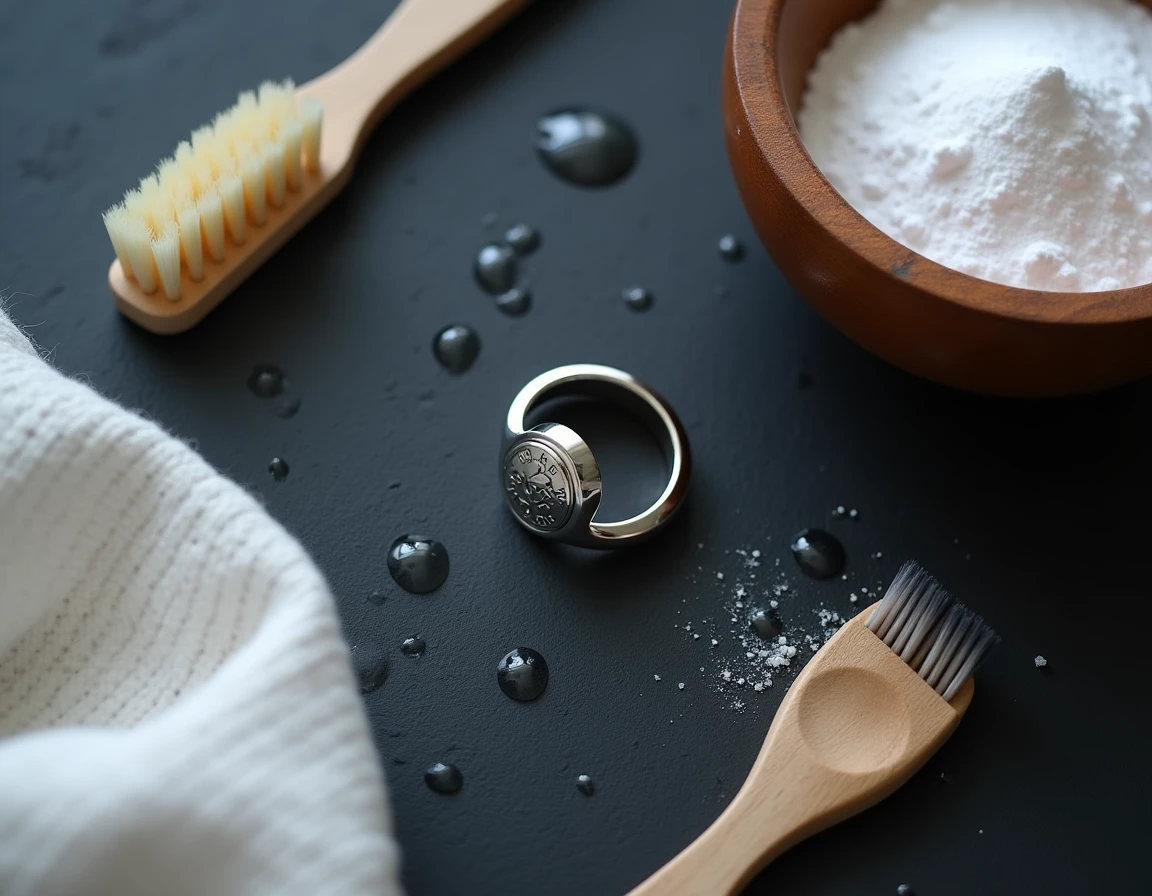
Soak the ring in lukewarm water mixed with a drop of mild soap for a few minutes. Use a very soft-bristled brush (an old toothbrush works) to dislodge residues lodged in the crevices of the engraving. Rinse with clear water, then dry with a soft, lint-free cloth.
For tarnished silver, a mixture of lukewarm water and baking soda applied as a light paste on the outer surface restores shine. Never leave this paste in the crevices of the engraving: rinse thoroughly to avoid the baking soda embedding and altering the readability of the inscription.
Hard metals: tungsten, titanium, steel
These metals are resistant to scratches, but aggressive chemicals (pure vinegar, bleach, household products) can damage finishes or oxidize alloy components. A simple cleaning with soapy water and thorough drying is sufficient. Avoid ultrasonic baths on deep engravings, as vibrations can widen fine lines over time.
Preventing engraved ring marks in daily life
Some habits reduce the formation of the mark on the finger and the buildup of the engraving.
- Apply moisturizer and foundation before putting on the ring. Allowing the product to dry for a few minutes prevents it from migrating into the engraving.
- Remove the ring before doing the dishes, cleaning, or exercising. Prolonged moisture and chemicals accelerate oxidation and residue buildup.
- Store the ring in an individual soft fabric pouch. Engravings rubbed against other jewelry wear out faster and accumulate micro-metallic particles.
The mark on the finger is not an inevitability linked to the engraving itself. It almost always results from a poorly fitted ring, an overly angular inner profile, or continuous wear without breaks. Correcting these parameters does more than any skincare treatment, and your engraved ring retains its inscription intact.