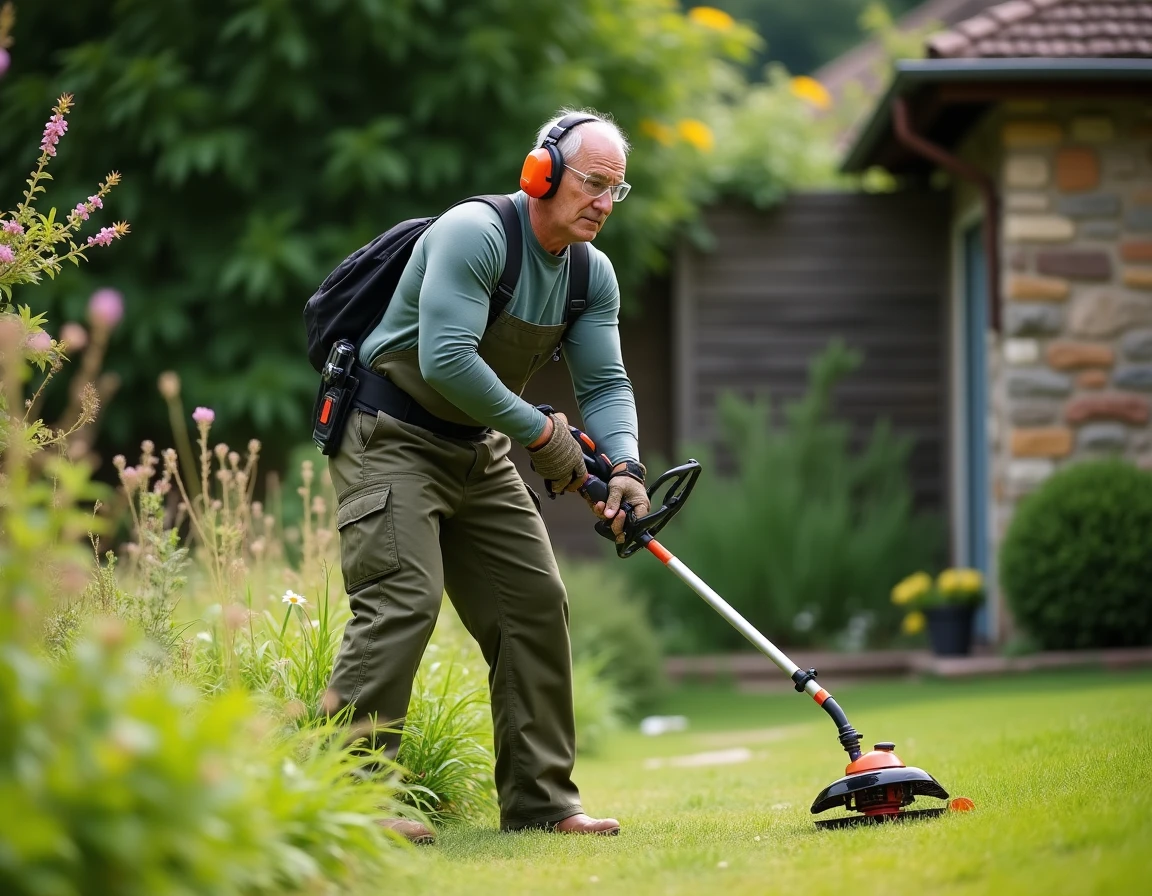
A sloping plot with brambles that gain ground every week, a bank that the mower can’t reach, fence borders overrun by grasses: it is often in the face of these concrete situations that one decides to invest in a brush cutter. The choice of the right model depends less on the brand than on the exact nature of the work to be done and the constraints of your plot.
Noise and emissions regulations: what guides the choice before the technique
Before even comparing engine sizes or voltages, it saves time to check what the municipality allows. More and more French municipalities are restricting the hours of use for noisy thermal equipment. Lyon updated its noise regulation in 2023, while Bordeaux had already specified its time slots in 2022.
For a garden in a dense residential area, a battery-powered brush cutter avoids neighborhood conflicts and eliminates time constraints. On an isolated plot of several hundred square meters, thermal remains relevant, but European Stage V standards have pushed manufacturers to revise their two-stroke engines towards low-emission versions.
Today, there are specialized catalogs that allow for quick comparisons of models based on their engine type and noise level, such as on debroussailleuse-warrior.com, where product sheets detail these characteristics.

Thermal, battery or corded brush cutter: adapting the motorization to the terrain
The choice of motorization is not made on a whim. It directly results from three parameters: the area to be treated, the density of the vegetation, and the proximity of an electrical outlet.
Thermal for large overgrown areas
An overgrown plot with thick brambles, shrub shoots, or grass taller than the knee requires sustained power. Thermal engines (two-stroke or four-stroke) deliver this power without autonomy limits. The downside: higher weight, engine maintenance (spark plug, filter, oil-gas mixture), and significant noise.
The four-stroke consumes less and vibrates less than the two-stroke, but generally costs more to purchase. For occasional use on a large plot, the low-emission two-stroke remains a common compromise.
The battery for medium-sized gardens
Sales of battery-powered brush cutters have increased significantly in recent years, driven by rising fuel costs and noise restrictions. In a medium-sized garden with regularly maintained vegetation, a lithium-ion battery provides enough autonomy for a complete brush cutting cycle.
The limit appears with very dense vegetation or long sessions. Feedback varies on this point depending on the brands and the battery capacity (expressed in amp-hours). Having a spare battery is often the simplest solution.
Corded: a finishing tool
The corded electric brush cutter is suitable for finishing edges close to the house. Its limited range due to the cord and modest power restrict it to fine grasses. It is quickly forgotten once you need to move away from the outlet.
String or blade cutting head: choose according to the vegetation
The cutting system is the second decisive criterion, and it is often poorly chosen because the existing vegetation is underestimated.
- Nylon string is suitable for soft grasses, cereals, and lawn finishing. It wears out quickly on woody stems and breaks upon contact with stones. Common diameter: between two and three millimeters depending on the engine power.
- The grass blade (three or four teeth) tackles tall grasses and semi-woody stems. It remains effective on nettles, thistles, and young shrub shoots.
- The bramble blade or brush disc (many teeth) is designed for thick brambles, stump shoots, and woody vegetation. On a plot left fallow for several seasons, it is the only realistic option.
A versatile model that accepts both string and blade offers more flexibility. You can switch from string for borders to blade for the bank without changing machines.
Weight and harness: the factor that guides often overlook
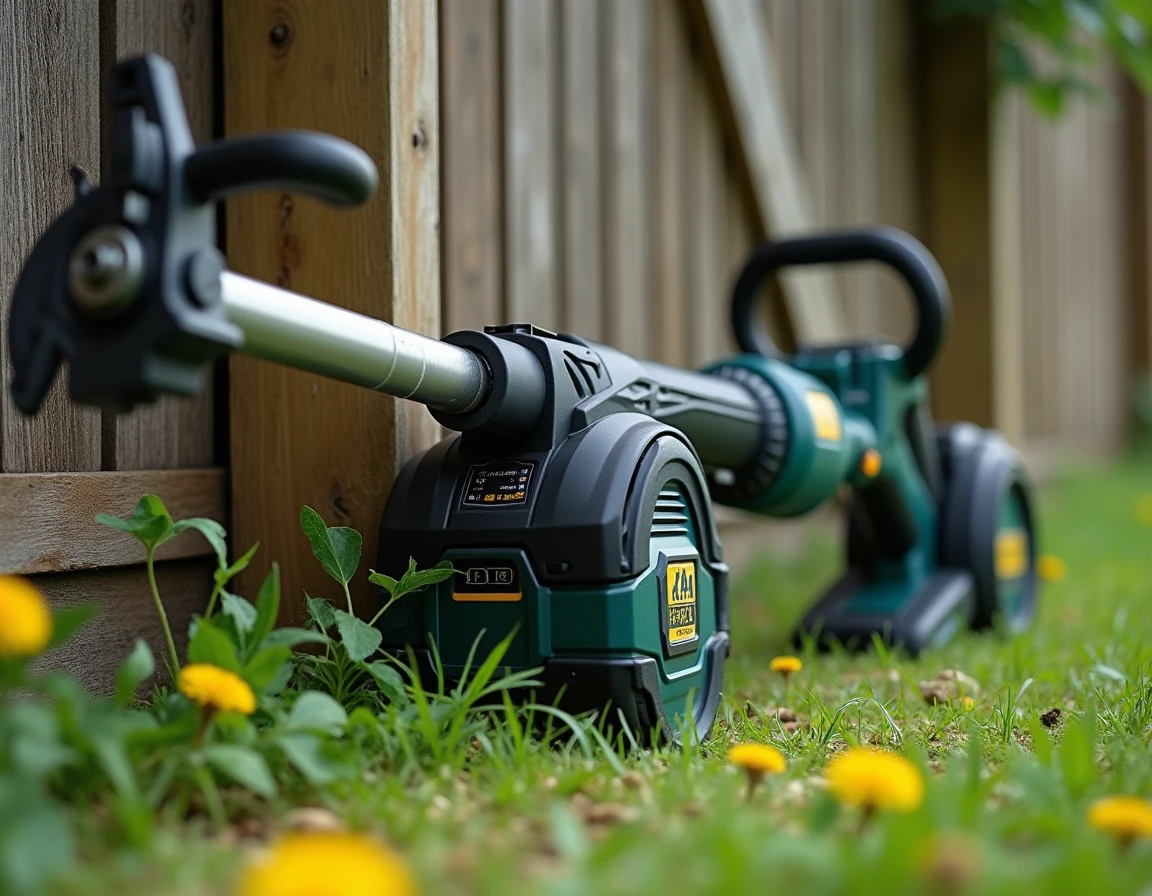
There is much talk about power and motorization, but less about user comfort during a real work session. A thermal brush cutter commonly weighs several kilograms more than a battery model. After an hour of lateral sweeping on a slope, the difference is felt in the shoulders and back.
The harness is an integral part of the choice. Three configurations exist:
- The simple shoulder strap, sufficient for short sessions on flat terrain.
- The double strap harness, which distributes the weight across both shoulders and stabilizes the machine on slopes.
- The professional harness with lumbar belt, which transfers some of the weight to the hips. For uneven terrain or sessions exceeding half an hour, it is a real gain.
Testing the weight of the machine in-store, with the harness adjusted, gives a much more reliable idea than reading a technical sheet. A lighter model with slightly lower power may prove more effective in practice, simply because you tire less and maintain a consistent motion for longer.
Regular maintenance of a brush cutter: actions that extend its lifespan
A poorly maintained tool loses performance as early as the second season. On a thermal engine, check the spark plug, air filter, and carburetor condition before each season begins. The oil-gas mixture must adhere to the ratio indicated by the manufacturer, or it risks clogging the engine or causing overheating.
On a battery model, maintenance focuses on the cutting head and battery storage. A lithium-ion battery should be stored at half charge in a temperate place during winter, never fully discharged or exposed to frost.
For all models, the nylon string should be replaced as soon as it is too short to cut effectively, and the blades should be sharpened or changed when the teeth are dull. A visual inspection of the protective cover and handle before each use takes less than a minute and prevents accidents.
The choice of a brush cutter comes down to matching three elements: the motorization suited to your area and noise constraints, the cutting system suited to the actual vegetation of your plot, and a weight that you can bear over the duration of the session. A versatile model with a comfortable harness meets the majority of needs for a private garden.