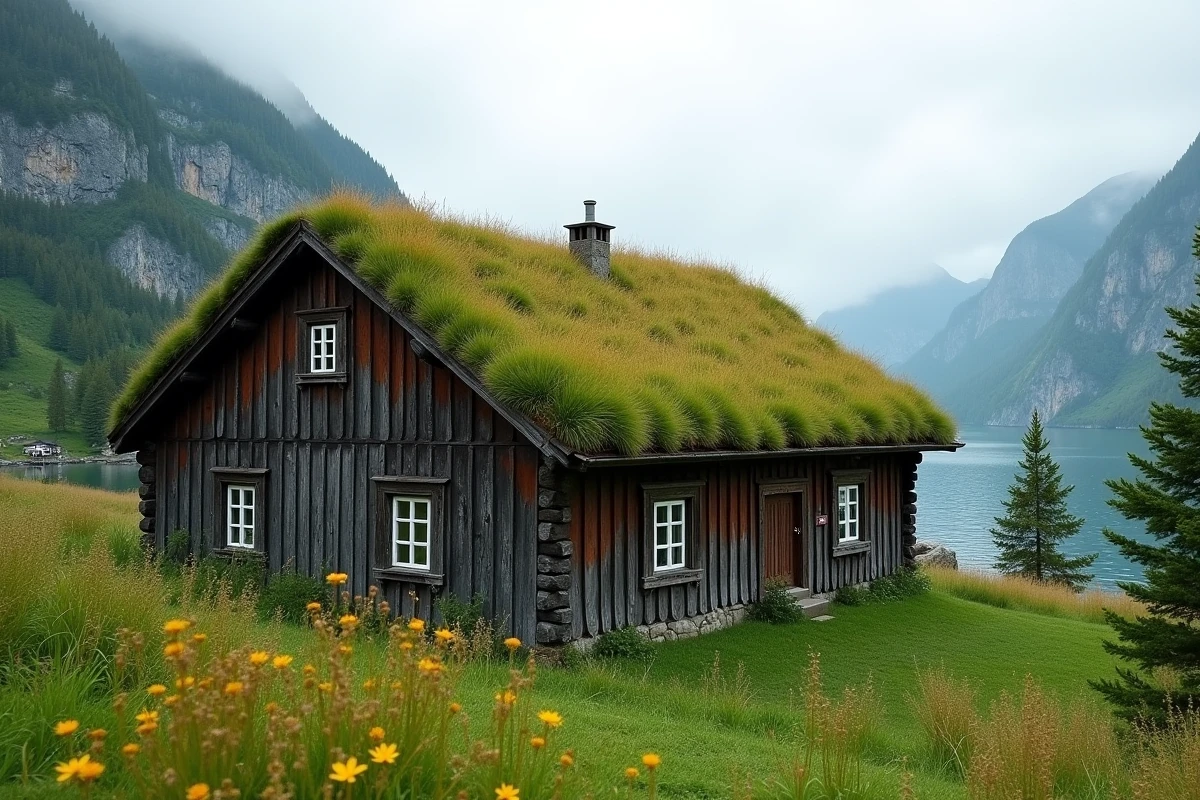
A green roof covered with grass, moss, and sometimes wildflowers is one of the most recognizable architectural signatures of Scandinavia. In Norway, this roofing technique is based on a simple principle: layering birch bark and soil on a wooden frame, then allowing vegetation to take root. This method has endured through the centuries and remains visible in many villages in the northern part of the country.
Birch Bark and Peat: The Construction Technique of Norwegian Roofs
The structure of a traditional grass roof begins with a solid wooden frame, often made of pine or spruce, designed to support a weight far greater than that of a conventional slate or tile roof. On the roof boards, several layers of birch bark are laid in overlapping fashion to ensure waterproofing. This bark contains natural oils that make it water-resistant for decades.
Above the bark comes a thick layer of peat or topsoil, in which grasses and mosses take root. The substrate forms a compact mass that withstands wind, a crucial factor in coastal areas exposed to North Atlantic storms.
To delve deeper into the history of grass roofs in Norway, we must go back to the Viking era, when this method addressed a direct constraint: the available materials were limited to wood, stone, and peat. Tiles did not exist in these latitudes, and slate was difficult to extract in many regions.
Viking Origins and Evolution Through Nordic History
The first traces of green roofs in Scandinavia date back several centuries before the Middle Ages. The semi-buried dwellings of the Viking era already used peat as an insulating material for both walls and roofs. In a climate where winter temperatures drop well below zero, earth and grass formed a natural thermal barrier.
Over time, the technique was refined. The wooden stave churches (stavkirke), some of which still exist in southern Norway, testify to the growing mastery of waterproofing with birch bark. Each village adapted the composition of the substrate and the thickness of the vegetation layer to local conditions, depending on altitude, wind exposure, and rainfall in the region.
Decline and Rediscovery in the Twentieth Century
Industrialization gradually marginalized grass roofs. Manufactured materials (corrugated iron, imported tiles) replaced them in most coastal towns and villages. The technique survived mainly in isolated rural areas, the mountains inland, and certain northern archipelagos.
Environmental and heritage awareness has reversed the trend. Restoration programs have encouraged the rehabilitation of old buildings with their original green roofs. New constructions also adopt the principle, adapting it with modern waterproofing membranes beneath the substrate.
Thermal Insulation and Water Retention: The Concrete Benefits of a Green Roof
The primary advantage of a grass roof is its insulating power in both winter and summer. The mass of earth and vegetation slows thermal exchanges between the interior and exterior of the building. In winter, the layer of snow that accumulates on top further enhances insulation. In summer, the evapotranspiration of plants cools the roof surface.
The second benefit concerns rainwater management. A green roof absorbs a significant portion of precipitation before gradually releasing it. In areas with high rainfall, such as the west coast of Norway, this retention capacity limits runoff and reduces pressure on surrounding soils.
- Passive thermal regulation: the earth and roots form a buffer that mitigates temperature fluctuations, reducing the need for heating in winter
- Protection of the waterproof membrane: the substrate protects the underlying layers from UV rays and mechanical shocks, extending the roof’s lifespan
- Habitat for local biodiversity: mosses, grasses, insects, and sometimes small birds find refuge on these green surfaces, even in urban settings
- Acoustic absorption: the thickness of the substrate dampens the noise of rain and wind, an asset in exposed locations
Maintenance and Structural Constraints of a Grass Roof Today
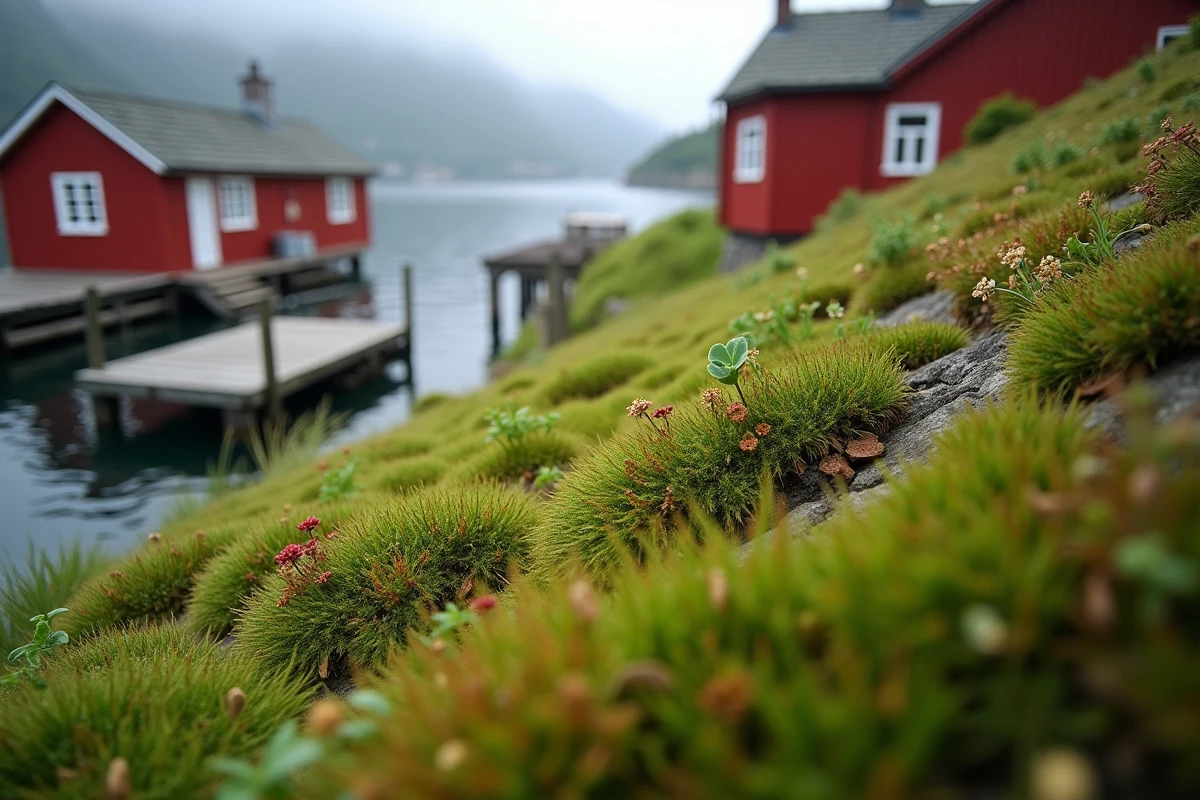
A green roof cannot be installed on just any frame. The additional load from the wet substrate requires appropriate sizing of the supporting structure. The wood used must withstand prolonged moisture, and the roof slope must remain moderate to prevent soil sliding.
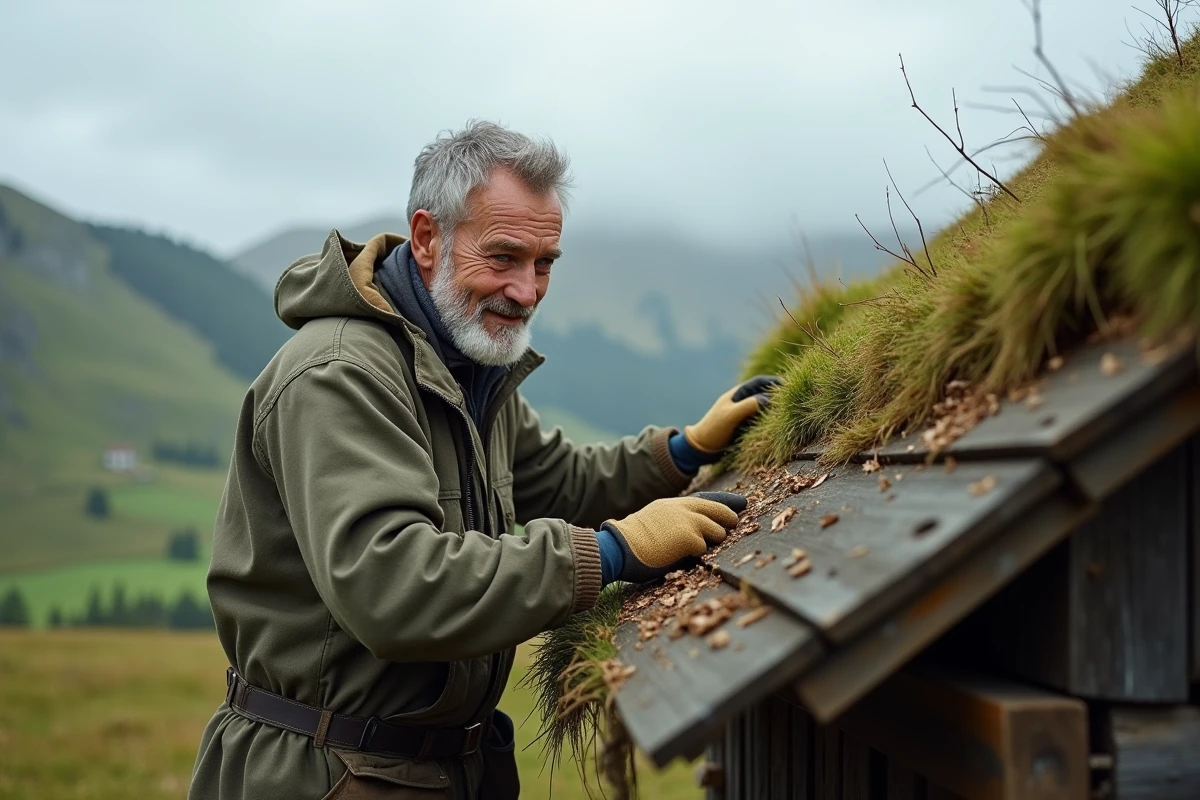
Maintenance is limited but regular. It primarily involves checking that the layers of bark or the synthetic membrane beneath the substrate do not have leaks and removing shrubs or young trees whose roots could damage the structure. In northern villages, this inspection is usually done once or twice a year.
The question of cost also deserves consideration. While traditional materials (bark, peat) were once free or nearly so, contemporary installations incorporate technical membranes, drainage systems, and sometimes calibrated substrates. The initial budget exceeds that of a standard roof covering, but the longevity of the entire system and heating savings offset this over the building’s lifespan.
Norwegian grass roofs are not a frozen folkloric relic. They embody an architectural response to a specific location, a harsh climate, and local resources. The technique, born out of necessity in the mountains and northern archipelagos, now fuels discussions on sustainable construction well beyond Scandinavia.