A microwave plugged into a shared power strip with the kettle and toaster: this is the kind of setup found in many kitchens, and it is also the one that causes overheating, repeated tripping, or even fires. The NF C 15-100 standard precisely regulates the connection of cooking appliances, including microwaves. Knowing which circuit, cable, and circuit breaker to use helps avoid real problems, not just ticking a regulatory box.
Power strips in the kitchen and microwaves: a risk underestimated by insurers
We start with the ground reality, because that’s where the issue lies. The microwave consumes significant power when it starts up. If this power goes through a power strip already used by other appliances (kettle, mixer, toaster), the cumulative current quickly exceeds the capacity of the strip.
Reports from installers published in recent years indicate a significant increase in claims related to overloaded power strips in kitchens. The problem does not stop at immediate safety: home insurers remind us that non-compliance with NF C 15-100 (lack of suitable wall socket, non-compliant circuit) can complicate compensation in the event of a fire of electrical origin.
Specifically, if an expert finds that the microwave was plugged into an extension cord or a non-compliant power strip, the claim file becomes complicated. We are talking about understanding the electrical standards and microwave sockets before installing any equipment in a new or renovated kitchen.
Specialized 20 A circuit for microwaves: what NF C 15-100 provides
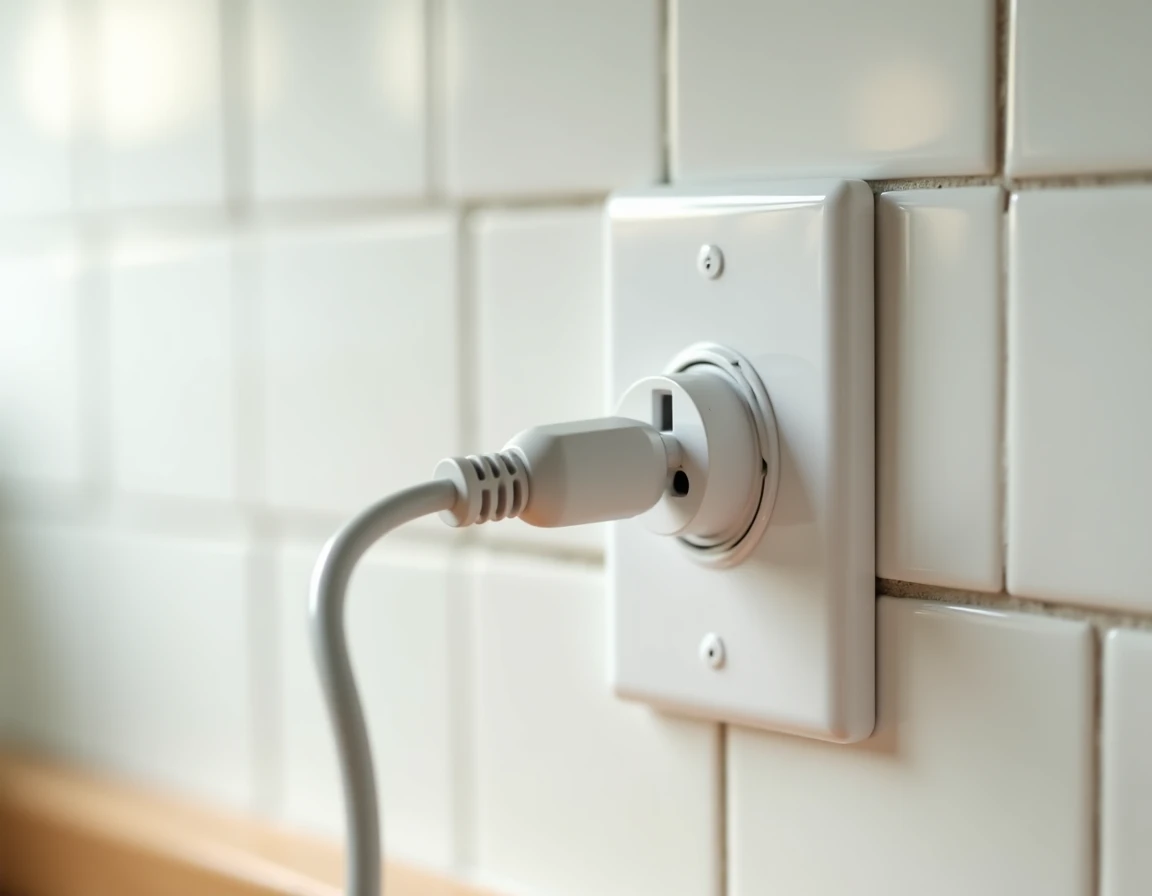
The NF C 15-100 standard distinguishes heavy cooking appliances (oven, hobs) from intermittent-use appliances like the microwave. Since the standard was consolidated in 2022, professional guides recommend treating the built-in microwave as an appliance requiring a specialized 20 A circuit wired in 2.5 mm².
This circuit can be dedicated to the microwave alone or shared with only one other appliance of the same category (a small auxiliary oven, for example). Under no circumstances should the microwave be connected to the general kitchen socket circuit, which also powers the phone charger or coffee maker.
Difference between dedicated circuit and standard socket circuit
A standard socket circuit in the kitchen is protected by a 16 A circuit breaker and wired in 1.5 mm². It supports multiple sockets, but it is not sized for an appliance that draws a high current at startup.
The specialized 20 A circuit in 2.5 mm² offers a safety margin suitable for the current peaks of the microwave. The wider cable section reduces heating, and the 20 A circuit breaker cuts off the current before the cable suffers.
- Standard socket circuit: 16 A circuit breaker, 1.5 mm² cable, several light appliances allowed on the same circuit
- Microwave specialized circuit: 20 A circuit breaker, 2.5 mm² cable, one or two maximum appliances of the same category
- Oven or hob circuit: 32 A circuit breaker, 6 mm² cable, one high-power appliance only
Circuit breaker and selectivity: avoiding cascading trips
Installing a 20 A circuit breaker for the microwave is not enough if the consistency with the rest of the electrical panel is not checked. This is a point that many DIYers overlook.
Selectivity is the ability of the panel to cut off only the faulty circuit without tripping the main circuit breaker. For a typical residential subscription (main circuit breaker 30 or 45 A), the microwave’s division circuit breaker should not go below 16 A. A too-low rating would cause cascading trips during current peaks at startup.
In practice, a 20 A circuit breaker is recommended for a fixed microwave. If a 16 A is used (in the case of a microwave placed on an existing socket circuit with few appliances), feedback on this point varies depending on the installation and the exact power of the appliance.
Mandatory differential protection
The microwave circuit must be connected to a 30 mA type A or AC differential switch located at the top of the row in the panel. This protection cuts off the current in case of a ground fault, for example, if water comes into contact with a live component. The standard requires at least two 30 mA differential switches per dwelling, one of type A for kitchen circuits.

Location of the wall socket: height and distance from the work surface
The NF C 15-100 sets precise installation rules for kitchen sockets. The socket intended for the microwave must respect a minimum height from the finished floor and be sufficiently distanced from water points (sink, faucet).
- Sockets installed above the work surface must be placed at least 8 cm from the surface of the worktop
- No socket should be located directly above the sink or cooking hob
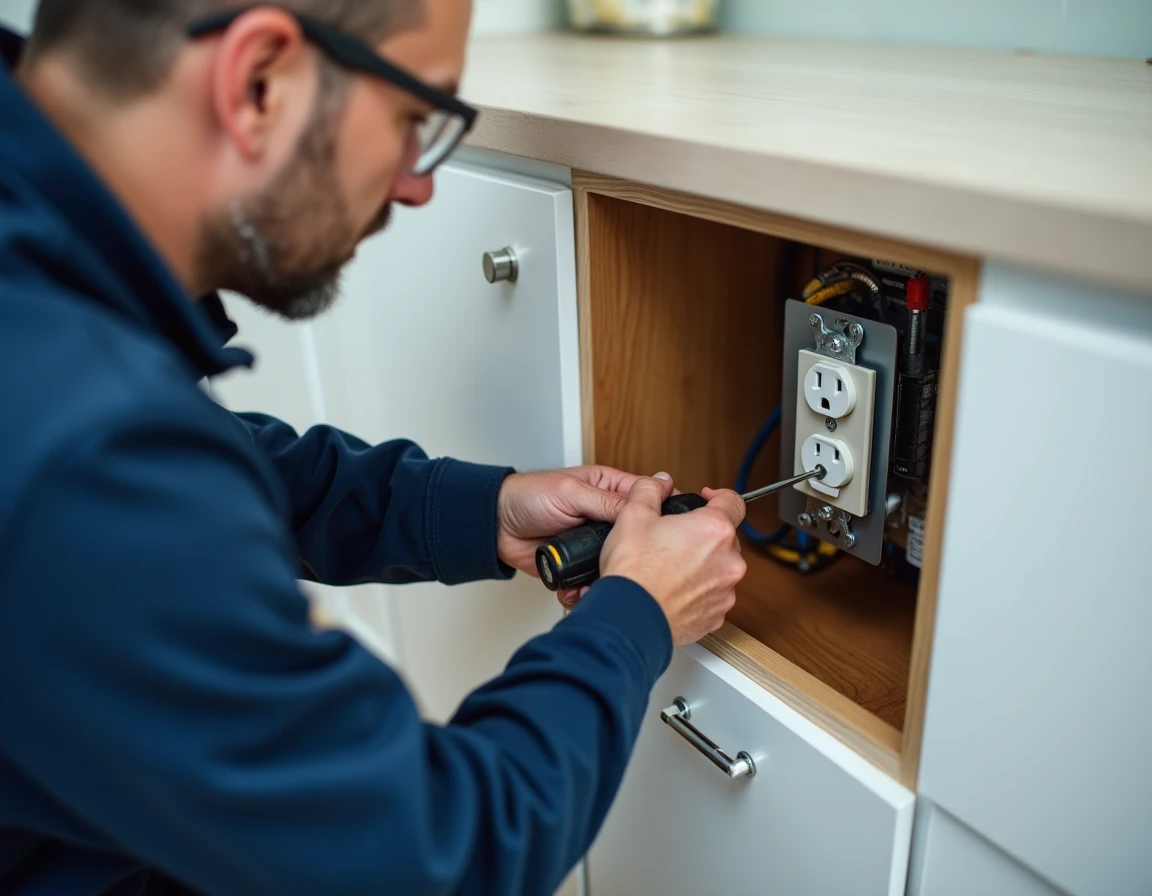
- The built-in microwave socket is generally located behind or next to the cabinet, accessible without complete disassembly
A detail often overlooked during renovations: ensure easy access to the socket to unplug the appliance in case of emergency. A built-in microwave with a socket stuck behind a fixed cabinet does not comply with the spirit of the standard, even if the electrical circuit is correct.
Verification and compliance of an existing circuit
When renovating a kitchen and wishing to add a microwave to an existing circuit, the first step is to identify the circuit breaker that protects the targeted socket and the size of the existing cable. A 1.5 mm² cable protected by a 16 A circuit breaker may be suitable for a low-power microwave placed alone on this circuit, but this is not the configuration recommended by current professional guides.
If the existing cable is 2.5 mm² and the circuit breaker is 20 A, we are in a compliant configuration. If this is not the case, running a new cable from the panel remains the most reliable solution. Reusing an already loaded circuit (tapping technique) is explicitly prohibited on a specialized circuit by NF C 15-100.
For an old dwelling without a recent electrical diagnosis, having a qualified electrician intervene allows for obtaining a certificate of compliance. This document may be requested by the insurer in case of a claim, and it is better to have it before than after.