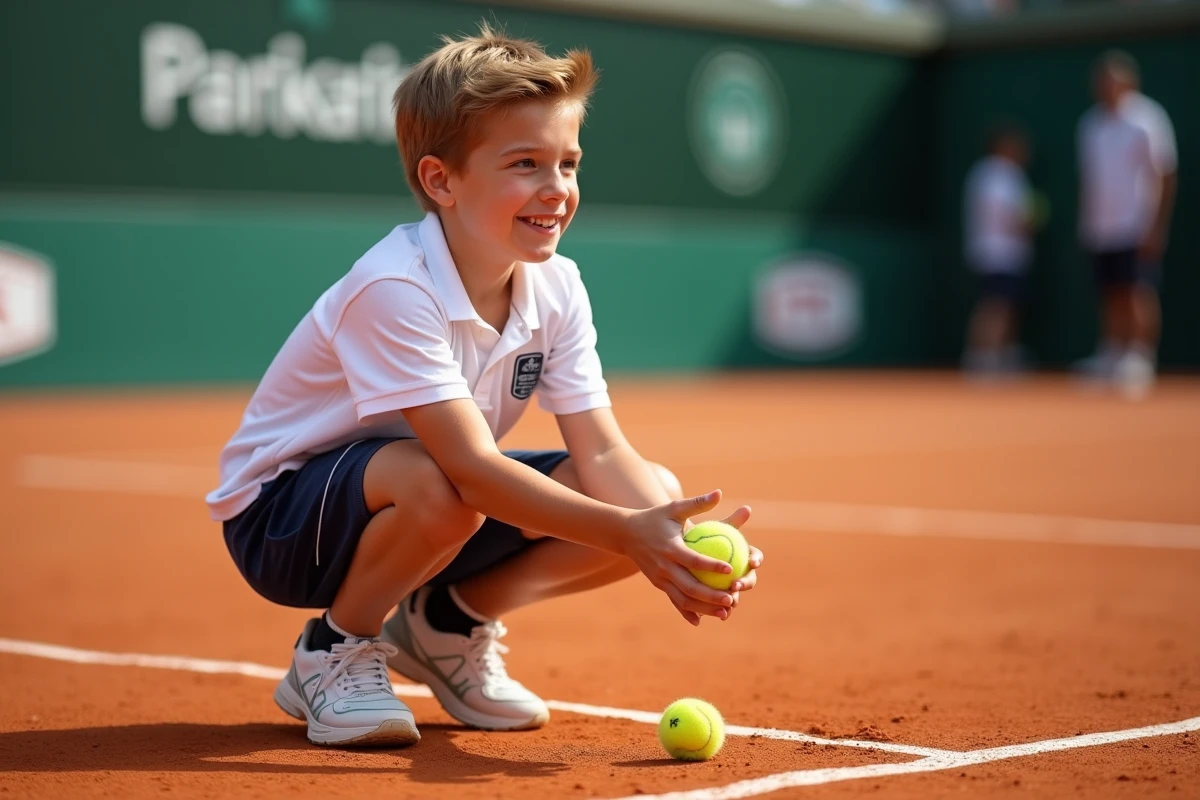
Ball collectors are part of the scenery at every major tennis tournament. Present on all courts, they ensure the smooth flow of the game between each point. Their status, supervision, and compensation vary from tournament to tournament, according to logics that mix federal volunteering, in-kind compensation, and occasional reimbursements. Among these different models, the topic deserves attention.
Federal Status and Selection at Roland-Garros: A Framework That Is Not Employment
At Roland-Garros, ball collectors are not employees. The system is managed by the Fédération Française de Tennis (FFT) through the “We Are Ballos” program, which opens an annual registration campaign for young licensed tennis players. Access is therefore through a federal framework, not through a traditional hiring process.
This institutionalized process is renewed at each edition of the tournament. The official “We Are Ballos” page, for example, announces the opening of registrations for Roland-Garros 2027, confirming a recurring and structured recruitment. No permanent positions exist for this role.
The selected candidates undergo several months of training and practice before the tournament. Here, we talk about the compensation of ball collectors as a salary, but the term is misleading: at Roland-Garros, these young people are considered volunteers. They receive complete equipment (official outfit, shoes) and in-kind benefits, not a bank transfer.
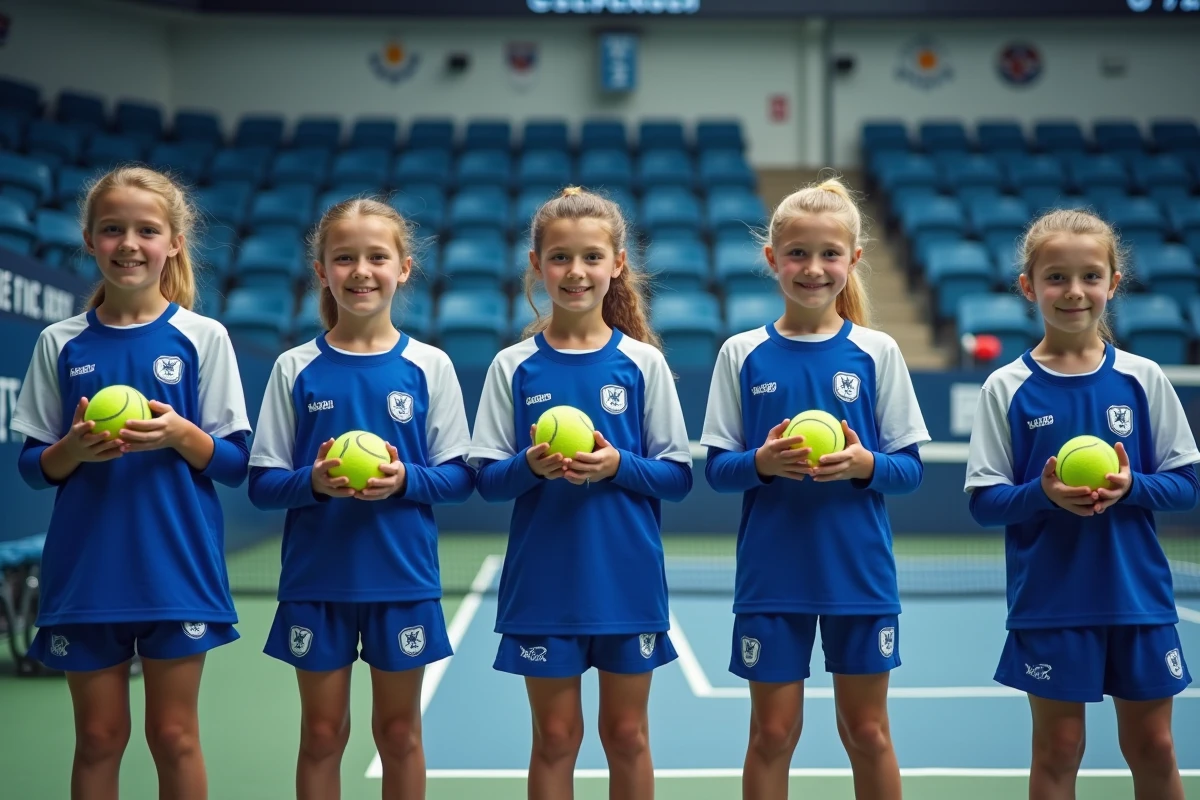
Financial Compensation in Tennis: What Collectors Actually Receive According to Tournaments
The Roland-Garros model does not reflect what is practiced everywhere. Practices vary greatly from one tournament to another, and the distinction between volunteering, compensation, and actual remuneration is not always clear.
At Wimbledon, the compensation is described as “symbolic” by available sources. The prestige of the tournament and the experience are presented as the main compensation. The All England Club provides the outfit and covers some expenses, but the amounts paid, if they exist, are not transparently published.
At the US Open, the operation differs. Ball collectors there are historically compensated, and the tournament recruits young people from local schools in New York. The principle of financial compensation, even modest, is more clearly established there than in Europe, although the exact amounts are not systematically made public.
What Collectors Receive in Practice
- A complete sports outfit provided by the tournament (uniform, shoes, sometimes a bag), kept after the event
- Access to the tournament’s backstage and the opportunity to watch matches outside of their service on the court
- A certificate or participation certificate issued by the federation or organizer, valuable in a sports career
- In some tournaments (notably in the United States), a daily allowance whose amount is not systematically made public
The primary motivation is not financial. For young people aged 12 to 16, the proximity to professional players and immersion in a global event are the main attractions.
Volunteering or Disguised Labor: A Legal Gray Area Rarely Questioned
The volunteer status applied to ball collectors raises questions that tournament organizers are not eager to address. In France, volunteering implies the absence of a subordination relationship and strict time constraints. The collectors at Roland-Garros follow a precise schedule, obey detailed instructions, and train for several weeks.
The boundary between regulated volunteering and work provision remains blurred. This point has never been the subject of a widely publicized dispute in France within the context of tennis, but the question arises in other sports disciplines where similar roles exist.
The fact that the candidates are minors adds an additional dimension. The agreement governing their participation falls under the federal sports framework, not labor law. This legal arrangement works as long as no one contests it, but it relies on the assumption that the experience gained compensates for the lack of remuneration.
Ball Collectors in Professional Sports: An Economic Model That Raises Questions
Grand Slam tournaments generate substantial revenue. The prize money awarded to players reaches very high amounts, and television rights represent a major part of each competition’s budget. In this context, the reliance on volunteering for ball collectors creates a striking contrast with the overall economy of professional tennis.
This imbalance is not unique to tennis. Football, rugby, and other disciplines also use ball collectors during matches or competitions, with equally varied statuses. However, tennis is the sport where this role is the most codified, the most visible, and the most publicized, making the question of remuneration all the more legitimate.
A Model That Could Evolve
The available data do not allow for a conclusion about an imminent evolution of the status of ball collectors in tennis. No official announcement from the FFT or the organizers of other Grand Slam tournaments points in this direction. The current model, based on volunteering and training, seems stable.
What is changing is the visibility of the subject. Each year, at the time of Roland-Garros or Wimbledon, the question resurfaces in the media. The public’s interest in the topic is increasing without practices changing. The day a collector or their family brings the debate to the legal arena, the organizers’ response will need to be more precise than a simple referral to “volunteering.”
The current operation holds because it relies on an exchange perceived as fair by the participants: a unique experience in exchange for a service rendered to the tournament. The number of applications far exceeds the available spots each year, which maintains the power balance in favor of the organizers.