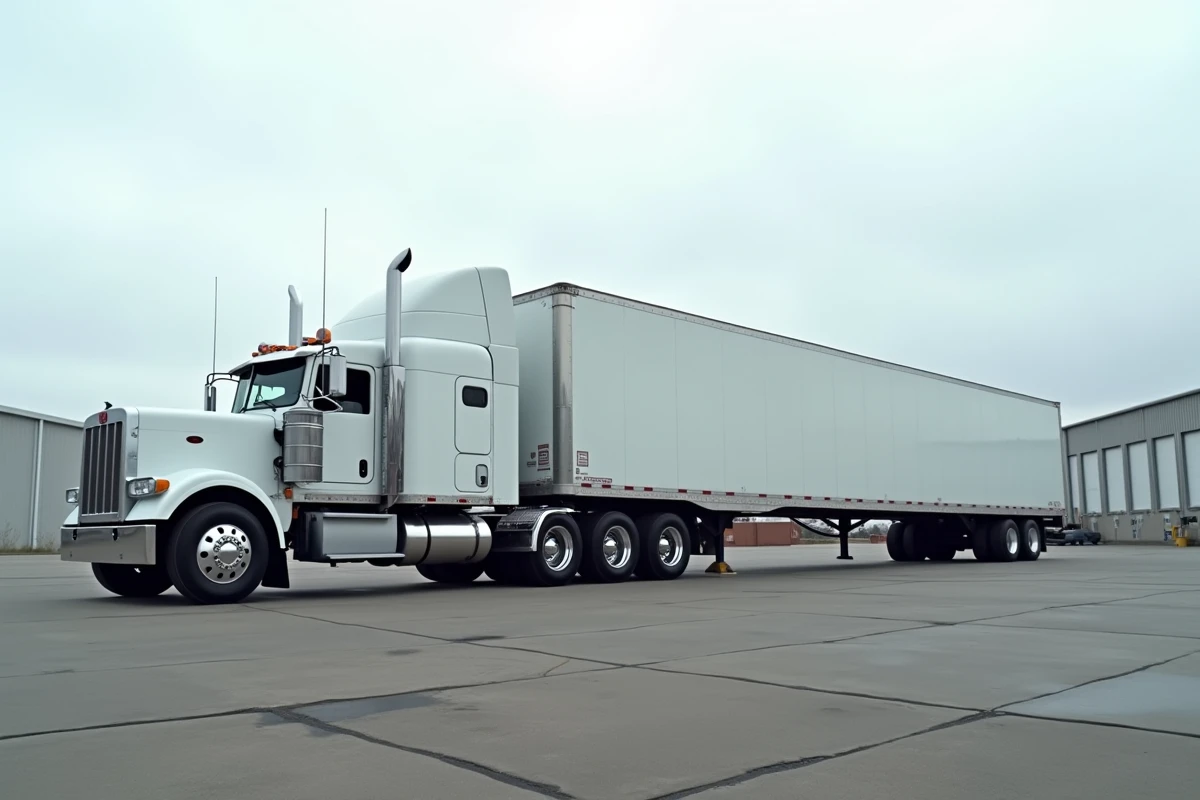
Overall length, maximum width, height under the roof: the dimensions of a semi-trailer truck determine both the loading capacity and the regulatory compliance of an articulated vehicle. The limits vary according to the type of semi-trailer, axle configuration, and the country of operation. This article compares the most common dimensions in France and Europe, and then analyzes the differences that matter when choosing a vehicle.
Regulatory dimensions of a semi-trailer combination in France and Europe
French regulations and the European directive set identical ceilings on three axes. The table below summarizes the limits applicable to articulated combinations of tractor + semi-trailer operating on the national network.
| Dimension | Regulatory limit | Note |
|---|---|---|
| Total length (articulated combination) | 16.50 meters | Tractor + semi-trailer, including coupling |
| Length of the semi-trailer alone | 13.60 m (standard) | Up to 13.72 m for long aerodynamic versions |
| Maximum width | 2.55 meters | 2.60 m for refrigerated vehicles (insulated walls) |
| Maximum height | 4.00 m | No harmonized European limit, usual French value |
| Maximum authorized total weight (5 axles) | 44 tons | Generalized in France, excluding local restrictions |
These values frame almost all tautliner, van, or flatbed semi-trailers that operate on highways. They leave a narrow margin for manufacturers, who optimize every centimeter of usable interior length.
To discover the dimensions of a semi-trailer truck according to each configuration, it is necessary to distinguish between overall length and floor length, as the gap between the two varies significantly from one body type to another.

Usable length and loading volume according to the type of semi-trailer
The regulatory length of 13.60 m does not translate into an identical floor length across all models. The thickness of the walls, the presence of a tailgate, the type of doors, or the refrigeration insulation take up space. The usable interior volume directly depends on these body choices.
Tautliner semi-trailer (tarpaulin)
This is the most common configuration for general freight transport. The floor length generally reaches almost all of the 13.60 m, and the usable volume approaches 90 cubic meters on standard versions. The interior height, around 2.70 m, allows for loading three levels of European pallets on certain models.
Refrigerated semi-trailer
The insulated walls reduce the interior width to about 2.45 m (compared to 2.48 m on a standard tautliner). The usable volume drops below 85 m³. However, the allowed exterior width rises to 2.60 m for refrigerated vehicles, which partially compensates for the loss due to insulation.
Mega semi-trailer (or megavolume)
The lowered floor reduces the loading height and allows for an interior height of about 3 m. The usable volume often exceeds 100 m³, making it the preferred format for light and bulky goods. The exterior length remains within the limit of 13.60 m.
- Standard tautliner: usable volume around 90 m³, suitable for pallets and mixed loads
- Refrigerated: volume reduced by insulation, compensated by the width tolerance of 2.60 m
- Mega: volume over 100 m³ thanks to the lowered floor, without exceeding the regulatory length
- Flatbed: no walls, maximum floor length, but no lateral protection for goods
Load distribution by axle and configuration at 44 tons
France has generalized the limit of 44 tons for articulated combinations with 5 axles on the national network. This overall limit says nothing about the admissible load per axle, which remains the real limiting factor on a daily basis.
An unbalanced combination can comply with the 44 tons total while exceeding the authorized load on the drive axle or on the tridem of the semi-trailer. Experienced loaders adjust the position of the load on the floor to distribute the mass evenly.
Lift axle and close-coupled triple axle
The lift axle helps reduce tire wear and empty fuel consumption by eliminating ground contact from an unnecessary axle. The close-coupled triple axle distributes the mass over a short distance and optimizes the payload without exceeding the axle limits. These two configurations directly influence the wheelbase of the semi-trailer and, consequently, the turning radius of the combination.
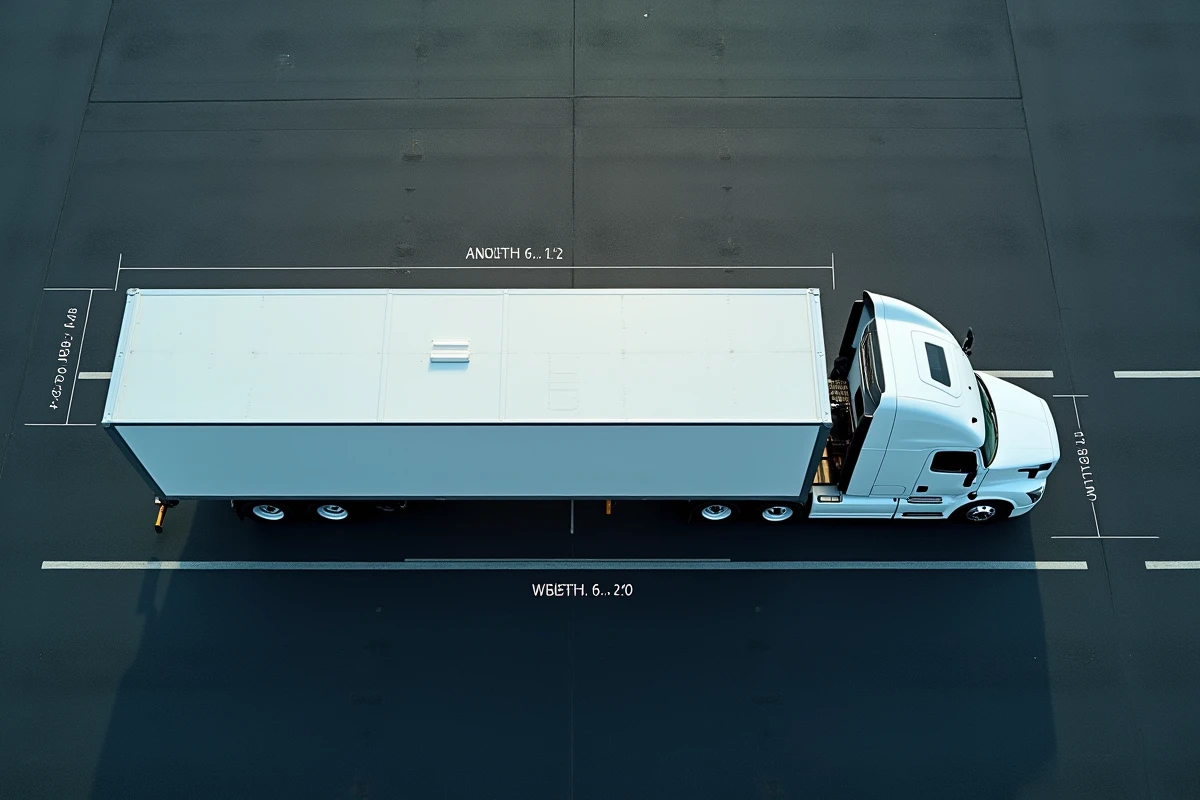
Aerodynamic long semi-trailers: what the European regulation changes
Regulation (EU) 2019/1242 on CO₂ emission standards for heavy goods vehicles has encouraged the emergence of so-called “aerodynamic long” semi-trailers. These models incorporate rounded front faces and side skirts that reduce drag without increasing the usable floor length.
Some versions reach up to 13.72 m (or 45 feet) while remaining within the legal European framework, thanks to the consideration of aerodynamic devices in the length calculation. The fuel consumption savings are measurable over long distances, which explains the gradual adoption of these profiles by long-distance transport fleets.
This evolution modifies the “usual” lengths described in most guides. A carrier renewing its fleet in 2024 must check whether the chosen semi-trailer utilizes these aerodynamic tolerances or remains within a classic dimension of 13.60 m.
The choice of a semi-trailer rarely hinges on a single figure. The total length sets the legal framework, but it is the combination of usable volume, load distribution by axle, and aerodynamic profile that determines the actual profitability of an articulated combination on the French network.