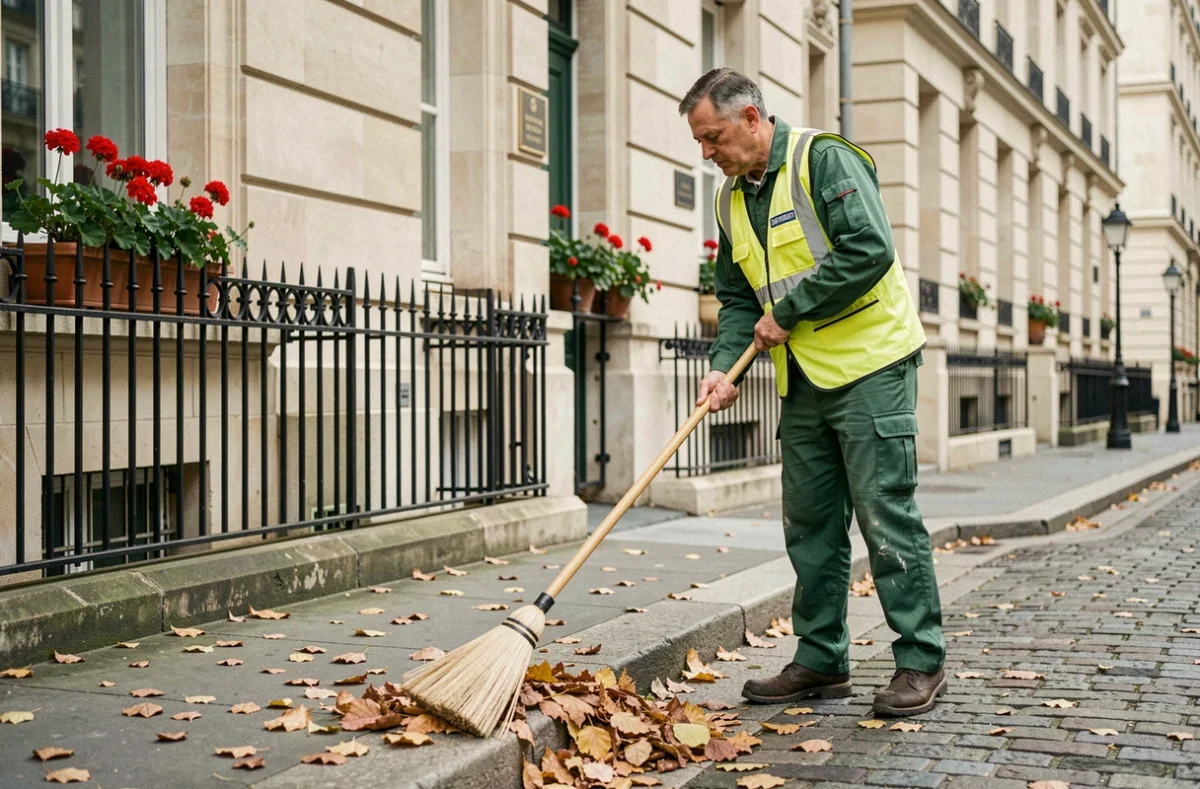
In Paris, the maintenance of sidewalks is based on an old but still applicable regulatory framework, articulated around the inter-prefectural decree of June 16, 1937. This text imposes a series of obligations on adjacent property owners (owners, tenants, occupants in any capacity) that go far beyond the simple occasional sweeping. We find that most disputes arise from a lack of understanding of this precise scope.
Inter-prefectural Decree of 1937 and Scope of Intervention in Paris
The inter-prefectural decree of June 16, 1937 remains the main legal foundation. It designates as responsible any person with direct access to the public road, without distinction between owner and tenant. The responsibility covers the entire length of the facade, over a width that can reach four meters.
This scope regularly surprises occupants of buildings located on wide avenues, where the sidewalk exceeds this distance. In this case, the portion beyond four meters falls under the jurisdiction of the City. Conversely, on narrow streets, the entire sidewalk may fall under the responsibility of the adjacent property owner.
The question of sidewalk maintenance legislation in Paris also arises for condominiums: it is the condominium association, through the property manager, that assumes the obligation. The condominium regulations can distribute this burden differently internally, but in relation to the municipality, the association remains the debtor of the obligation.
Concrete Obligations: Sweeping, Snow Removal, and Weeding in Paris
Daily sweeping is the basic obligation. It covers litter, fallen leaves, and various stains. However, Parisian regulations go further during the winter period.
Snow Removal and Preventive Salting
Adjacent property owners must clear snow and preventively salt the sidewalk in front of their facade. Two notable exceptions: on sidewalks with trees, sanding replaces salting to protect the vegetation. Salt and sand are not provided by the City, which constitutes a direct financial burden for the occupant.
We recommend stocking up on snow salt as early as autumn. A supply shortage during a cold wave exposes the adjacent property owner to a double risk: a fine and civil liability.
Weeding: Prohibition of Phytosanitary Products
Weeding the sidewalk remains mandatory, but chemical phytosanitary products are prohibited for individuals since the enactment of the Labbé law. Only mechanical or thermal methods are allowed. An adjacent property owner caught spraying chemical herbicide on the sidewalk is subject to a fine separate from that related to maintenance failure.
- Regular sweeping of litter and leaves across the entire regulated width
- Snow removal and salting (or sanding under trees) as soon as the first snow falls
- Mechanical or thermal weeding of sidewalk joints, without resorting to chemical products
- Removal of mud or dirt deposits after private works (garage exit, construction site)
Sanctions and 2nd Class Offense: What the Adjacent Property Owner Risks
Decree No. 2022-185 of February 15, 2022 has changed the situation. Violating a police order now falls under Article R. 610-5 of the Penal Code, resulting in a 2nd class offense with a maximum fine of 150 euros. Before this decree, the ceiling corresponded to a 1st class offense.
This sanction, however, requires the existence of a municipal or prefectural order precisely imposing the obligation in question. In Paris, the 1937 decree fulfills this condition for sweeping and snow removal. For weeding, it is the combination with texts related to phytosanitary products that establishes the sanction.
In practice, fines remain rare for simple failure to sweep. They focus on situations of untreated ice or persistent deposits reported by district municipalities.
Liability in Case of an Accident on a Parisian Sidewalk
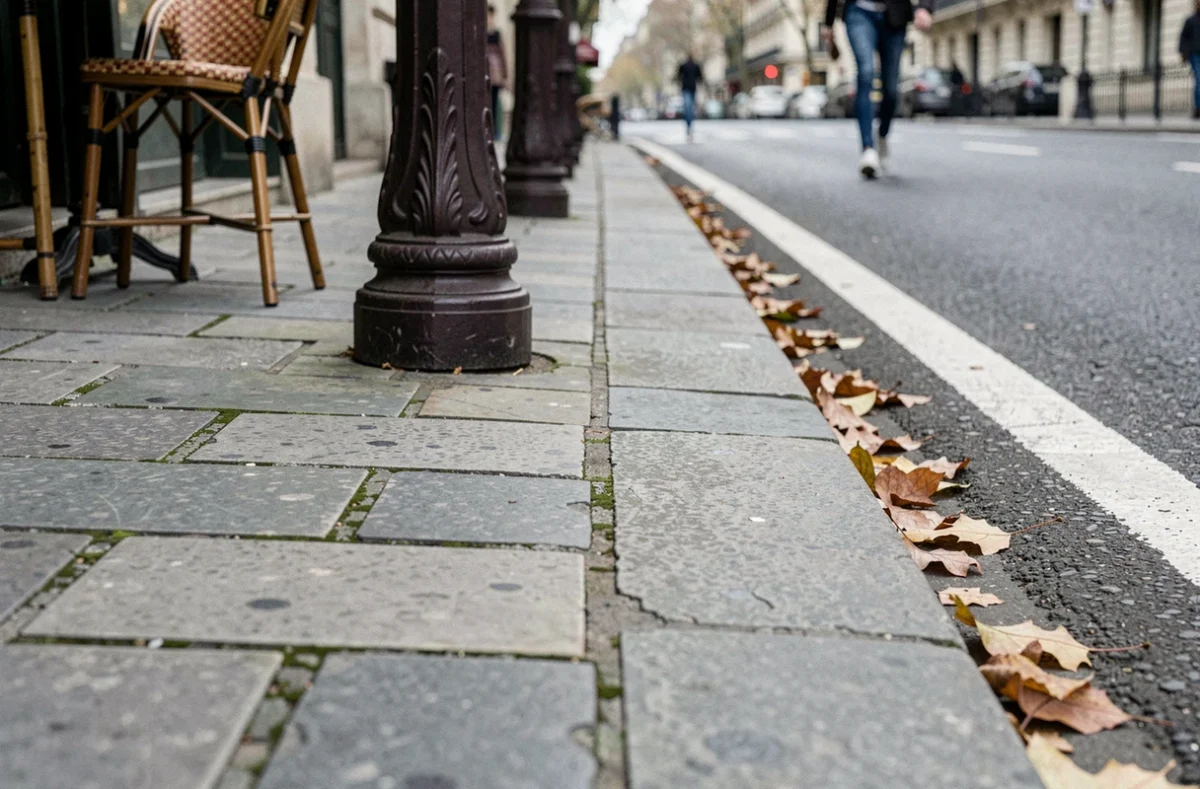
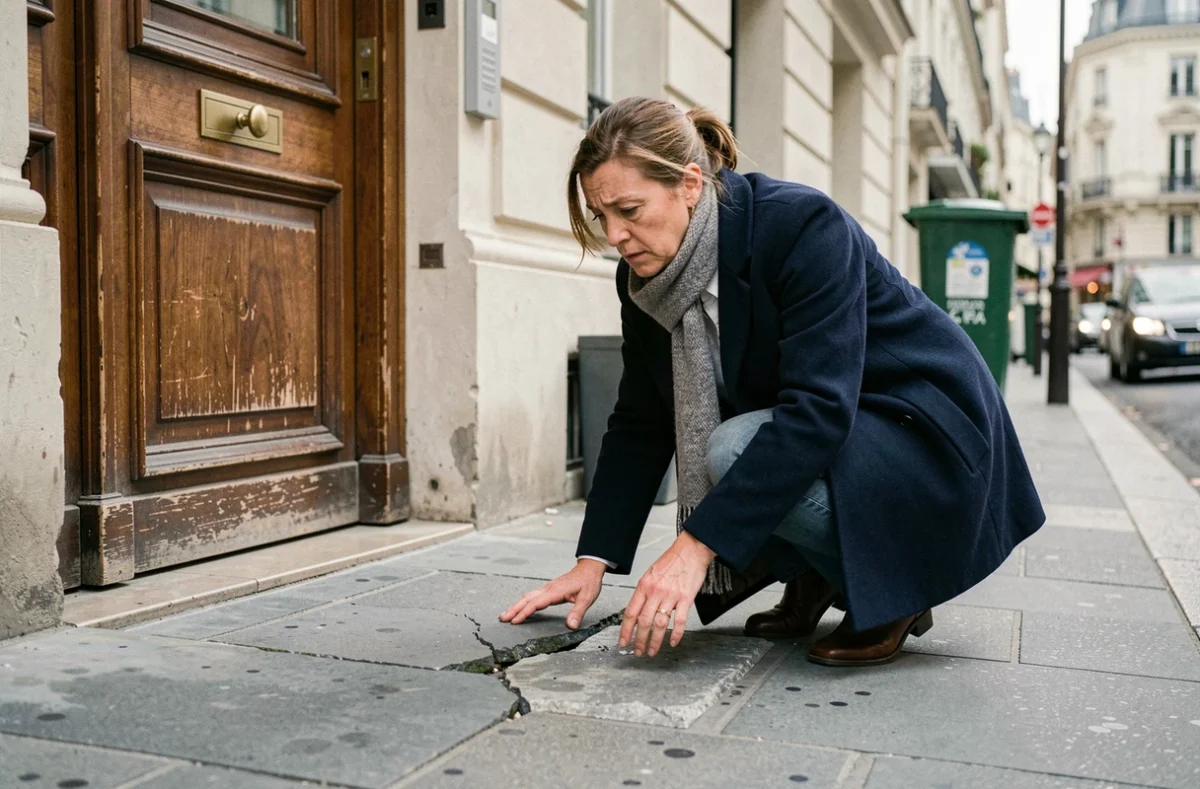
The question of liability in the event of a pedestrian fall is more complex than it seems. Two jurisdictions may be competent depending on the origin of the defect.
The administrative judge examines the municipality’s liability when the damage results from a failure of normal maintenance of the public work (damaged sidewalk, defective surface, dislodged manhole). The City of Paris, as the road manager, can be held liable based on the failure of normal maintenance.
The judicial judge intervenes when the damage is attributable to the adjacent property owner: unshoveled sidewalk, untreated ice, obstruction by private objects. The victim can hold the occupant civilly liable based on Article 1240 of the Civil Code (formerly 1382).
- Fall on untreated ice in front of a facade: liability of the adjacent property owner (judicial judge)
- Fall due to a defective surface or a pothole: liability of the municipality (administrative judge)
- Sidewalk damaged by private works or a garage exit: liability of the individual or company that caused the damage
In both cases, the adjacent property owner’s home insurance may cover damages through civil liability coverage. We observe that many contracts implicitly exclude damages related to the maintenance of public roads. Checking the civil liability clause of the home insurance contract before winter is a precaution that too few Parisians take.
Shared liability is common. A pedestrian who falls on an icy sidewalk may have their own negligence partially considered, reducing compensation. The judge assesses on a case-by-case basis the configuration of the site, the visibility of the danger, and the measures taken by the adjacent property owner.
The maintenance of sidewalks in Paris is based on a text from 1937, reinforced by sanctions raised in 2022. The burden falls on the occupant, not on the absent landlord. The financial risk is not limited to the fine: it is the civil liability following an accident that represents the heaviest stake.